


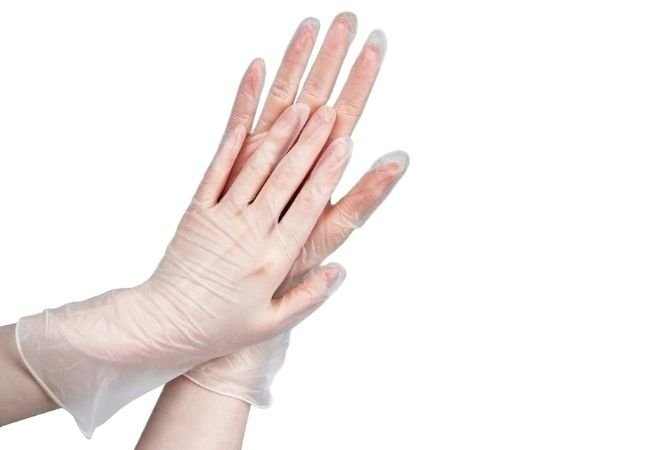

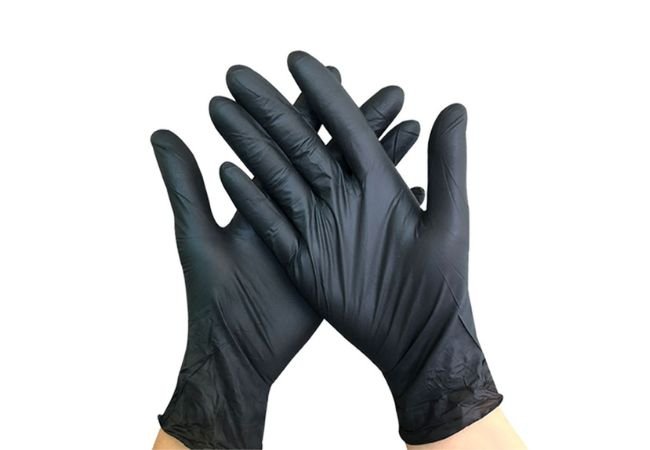
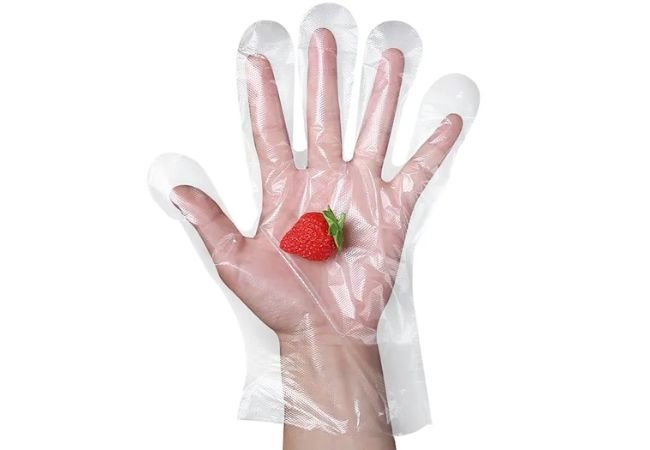
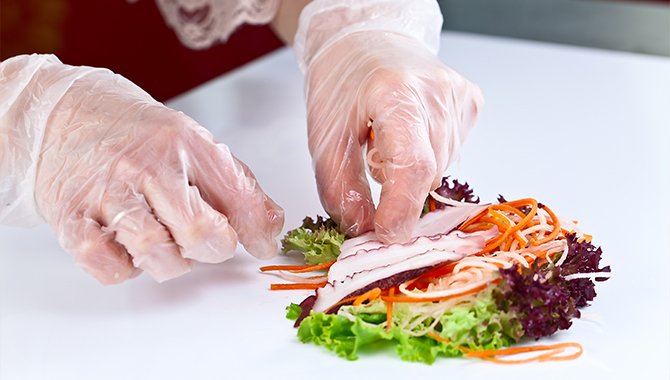
Food gloves must be used when handling food, including the processing of meat, seafood, fruits, and vegetables. They are also used in the baking industry for items like cakes and bread, as well as in food inspection or laboratory operations. Overall, however, they are most frequently used in the catering and food service industry.
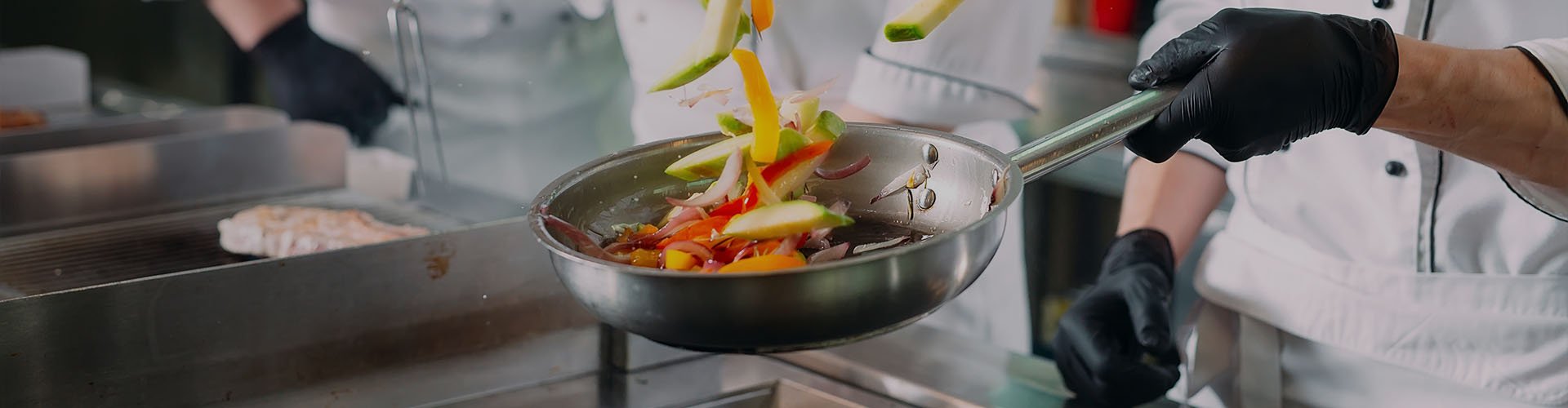
Lebensmittelhandschuhe
Food handling gloves are gloves designed specifically for the food industry to maintain hygiene and prevent contamination during the handling, preparation and serving of food, while protecting the user from cuts that can be caused by knives and other dangerous tools. One of the main reasons to use food gloves is to prevent contamination. Gloves act as a barrier between the food handler’s hands and the food, reducing the risk of transferring bacteria, viruses or other contaminants. Here are the features food gloves must have.
- Non-toxic
- Handling flexibility
- Angenehm zu tragen
- Cut resistant
- ölbeständig
- Water and oil resistant
- High handling performance
Custom Food Gloves Manufacturer in China
AIBON manufactures a wide range of food contact gloves suitable for numerous food processing projects. This includes food preparation, heavy duty fish, chicken, and even meat processing. Additionally, we can design precise gloves to keep areas sanitary and protect workers. In addition, there are a variety of sizes, colors, materials and strengths to choose from, such as nitrile, latex, vinyl, PE, and knitted ones.
Our company also has skilled workers to ensure consistent delivery times and can customize your food glove requirements. Customization includes size, color, weight, material, and even your corporate branding, products comply with food contact, let us understand your needs, we will ensure you are satisfied with the quality, cost and quick return.
Nehmen Sie noch heute Kontakt mit uns auf!
Proper Use Protocol
Specific guidelines must follow for using gloves in food service.
Below is a list of what they are.
- Washing hands before wearing the gloves
- Changing the gloves once every four hours
- It’s required to wear a new one when working on different food duty
- Do not wear gloves that are torn or damaged.
- Removing gloves after preparing raw poultry, raw meat, or seafood
- Putting on a new one while making ready-to-eat meals
- Quality Guidelines
- Food Glove Stability Sample
| Food Glove | |
| Manufacturing Under: | Complies with: |
| ISO 14001 | ASTM |
| CE EN 420 | |
| ISO 9001 | CE EN ISO 21420:2020 |
| Food Types | Latexhandschuh | Vinyl Glove | Nitrile Glove |
| Liquor | partially suitable | partially suitable | suitable |
| Vegetables | partially suitable | suitable | suitable |
| Meat | partially suitable | not suitable | suitable |
| Seafoods | suitable | partially suitable | suitable |
| Saturated Fat | partially suitable | not suitable | suitable |
| Pastries | suitable | suitable | suitable |
| Aqueous | suitable | suitable | suitable |
Which industries and work scenarios are food gloves mainly suitable for?
Can food gloves be exported?
Of course, but the prerequisite is that they must comply with the food safety and quality standards of the destination country. Each country or region has strict regulations governing this.
Eignet sich das für eine langfristige Zusammenarbeit und den Einkauf großer Mengen?
Ja. Aibon entwickelt für jeden Kunden maßgeschneiderte Lösungen, um eine stabile und langfristige Versorgung mit Schutzhandschuhen zu gewährleisten. Darüber hinaus unterstützen wir jährliche Beschaffungsaufträge und bieten das ganze Jahr über einen zuverlässigen, hochwertigen Service.
Are food gloves disposable or reusable?
Food gloves come in both disposable and reusable types. You can choose based on your specific needs, as each type of glove has its own distinct functions and characteristics.
Are food gloves suitable for use in wet or greasy environments?
Yes, but when selecting materials, it is important to choose those with moisture-wicking and oil-resistant properties to ensure a strong grip, thereby extending the service life of the gloves.
What are the commonly used materials for food gloves?
Generally speaking, the most commonly used materials for food gloves include latex, nitrile, PVC, PE, polyethylene, and similar materials.
Advantages of bulk purchasing food gloves
Bulk purchasing not only offers significantly lower prices, but also allows for full-carton shipments. In addition, samples can be provided for trial use to confirm quality and fit.
Are food gloves suitable for high-temperature or baking environments?
Food gloves are generally not suitable for direct contact with high temperatures or baking environments, but this depends on the glove material. Disposable gloves are typically not heat-resistant, while thicker nitrile gloves or heat-resistant materials such as silicone can withstand higher temperatures.
Stellen Sie Muster zum Testen zur Verfügung?
Ja. In der Anfangsphase können wir Ihnen Muster unserer Standardhandschuhe zur Begutachtung zur Verfügung stellen. Bei speziell angefertigten Handschuhen können wir auf der Grundlage Ihrer konkreten Anpassungswünsche weitere Absprachen treffen, um die Produktqualität sicherzustellen. Seien Sie versichert, dass wir Ihnen vor Beginn der Serienproduktion Vorproduktionsmuster zur Bestätigung vorlegen werden. Nach der Serienproduktion und vor dem Versand werden Ihnen zudem Serienmuster zur endgültigen Freigabe zur Verfügung gestellt.
Can food gloves provide protection against chemicals?
Generally speaking, food gloves can provide a certain level of light chemical protection. However, if you need to handle strong acids, strong alkalis, solvents, or other high-intensity chemicals, it is recommended to use specialized chemical-resistant gloves instead.
Ähnliche Produkte
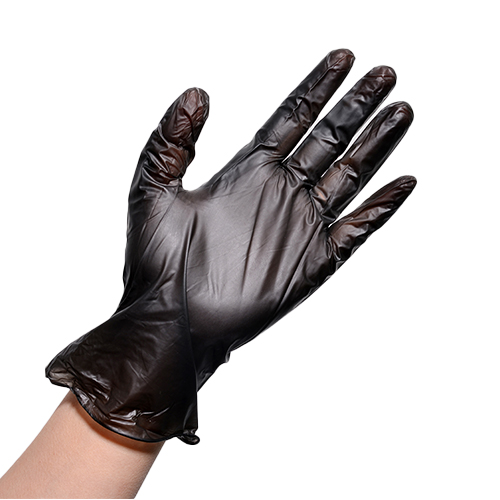
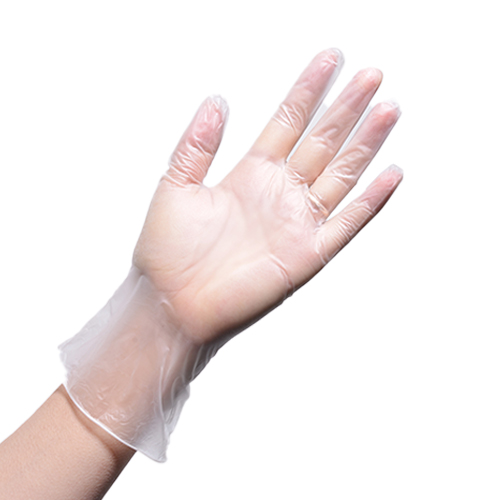



Food-Grade Materials for Gloves
For ideal gloves in food-related processing, here are the most in demand.
Polyethylene Gloves
Polyethylene gloves are lightweight and often used for short-term, low-risk tasks. They are commonly used in the food industry for tasks such as sandwich preparation.
Latex கையுறைகள்
Latex gloves are a traditional choice for food handling. They provide a high level of dexterity and tactile sensitivity. However, some individuals may have latex allergies, so alternatives like nitrile or vinyl are often preferred.
Nitrilhandschuhe
Nitrile gloves are a popular choice for food handling because they are latex-free and provide excellent resistance to punctures and chemicals. They are suitable for individuals with latex allergies and are known for their durability.
Vinyl Gloves
Vinyl gloves are another latex-free option. While they are less elastic and may provide a looser fit compared to latex or nitrile gloves, they are economical and suitable for short-duration tasks.
Standard Criteria in Selecting Food Gloves
Before placing an order, some factors indicate a quality needs to recognize. Check the following details below to get the best glove for food service.
- AQL level
- Right-fit gloves on hands
- Colorization
- Its wall thickness
- CE marking protection label
- Material
Allergy Reaction Awareness
Since food handling is the primary concern, identifying potential linked problems has to be considered essential. That includes even the gloves material. They have the risk of causing allergic reactions.
Therefore, in such cases, food preparation or processing should not be done while wearing a latex glove. It could result in a minor or severe allergic reaction. Taking advanced safety measures is necessary to avoid incidents.
There are, however, some gloves that are excellent for this field. Nitrile and vinyl gloves are a reasonable substitute for latex. They are both hypoallergenic gloves. Select a latex and powder-free glove to ensure total protection against allergens.
Choose the right material food gloves
Choosing the right food gloves is crucial to ensure food safety, hygiene, and compliance with regulations. Here are some key factors to consider when selecting food gloves:
- Material:
- Choose gloves made from food-grade materials such as latex, nitrile, vinyl, or polyethylene. Consider any allergies that users may have, and select gloves accordingly.
- Allergen Information:
- Be aware of common allergens associated with glove materials, especially latex. If allergies are a concern, opt for latex-free alternatives like nitrile or vinyl.
- Intended Use:
- Consider the specific tasks for which the gloves will be used. Different glove materials and types are suitable for various applications, such as food preparation, handling raw meats, or cleaning, the nitrile glove are most durable.
- Thickness:
- Choose the appropriate thickness based on the tasks and level of protection required. Thicker gloves provide more durability and protection but may reduce tactile sensitivity.
- Powdered vs. Powder-Free:
- Decide whether to use powdered or powder-free gloves. Powdered gloves can be easier to put on, but powder-free gloves are preferred in environments where powder contamination is a concern.
- Size:
- Ensure that the gloves are available in various sizes to accommodate different hand sizes. Proper fit is essential for comfort and functionality.
- Durability:
- Assess the durability of the gloves based on the expected duration of use and the tasks involved. Thicker gloves are generally more durable.
- Comfort:
- Choose gloves that offer comfort during extended use. Consider features like textured surfaces for better grip and ergonomic design.
- Resistance to Chemicals:
- If the gloves will come into contact with chemicals or cleaning agents, ensure they are resistant to these substances to maintain their integrity.
- Cost Consideration:
- Balance the quality of the gloves with your budget constraints. Consider the cost per glove and the value they provide in terms of safety and functionality.
Remember that the choice of food gloves may vary depending on the specific requirements of your food handling tasks. Regularly review and update your glove selection based on feedback and any changes in regulations or industry best practices.
Senden Sie Ihre Anfrage noch heute
 English
 Spanish
 Hindi
 Portuguese
 German
 Russian
 French
 Korean
 Japanese