


Whether in daily life or at work, hand protection is indispensable—especially in a fishery environment, where your hands face potential hazards such as moisture, cold, and cuts. Therefore, choosing the right gloves for protection is essential. Do you know which gloves are suitable for fishery environments and what their functions are? Rest assured, we will give you a comprehensive answer below.
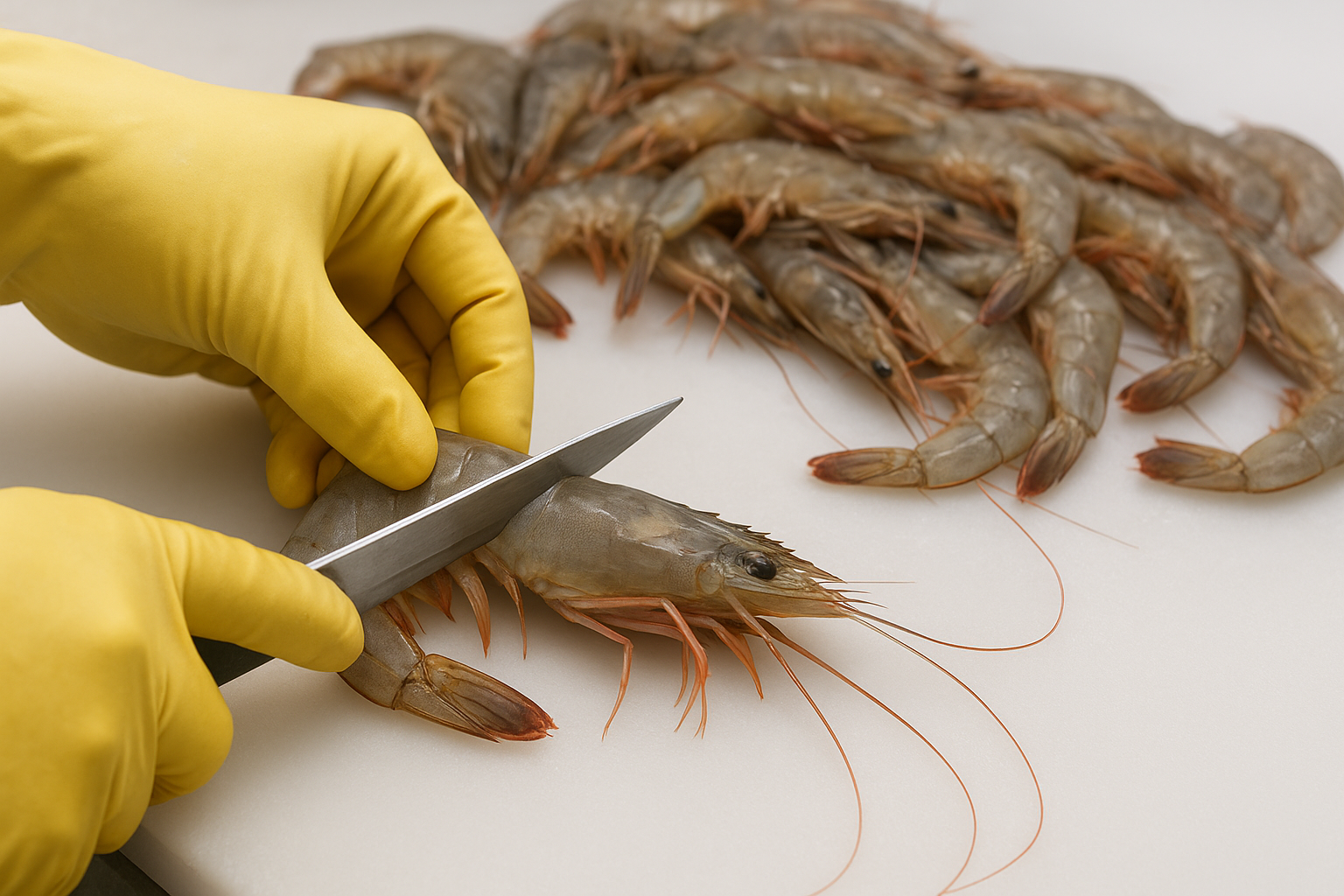
Gloves Suitable for Fishery Environments
ラテックス手袋
ラテックス手袋 are made from the sap (natural rubber) extracted from Brazilian rubber trees. After filtering and removing impurities, a mixture of chemical additives is incorporated. The mixture is finely processed, coated on glove molds, heat-cured, washed, and rinsed to form the final product—a combination of natural latex and synthetic materials.
Latex naturally provides waterproof and impermeable properties, keeping hands dry during long-term contact with seawater or freshwater. Whether fishing, handling fishing gear, processing seafood, or working with prawns, crabs, or shellfish, latex gloves perform exceptionally well.
The surface of latex gloves offers strong friction, maintaining a good grip even in wet or slippery conditions, effectively preventing items from slipping and avoiding unnecessary accidents.
When thick enough, latex gloves can also provide limited protection against sharp crab or shrimp shells, reducing minor cuts and punctures.
Latex gloves are soft, form-fitting, and sensitive to touch, allowing flexibility during work or daily tasks and reducing hand fatigue.
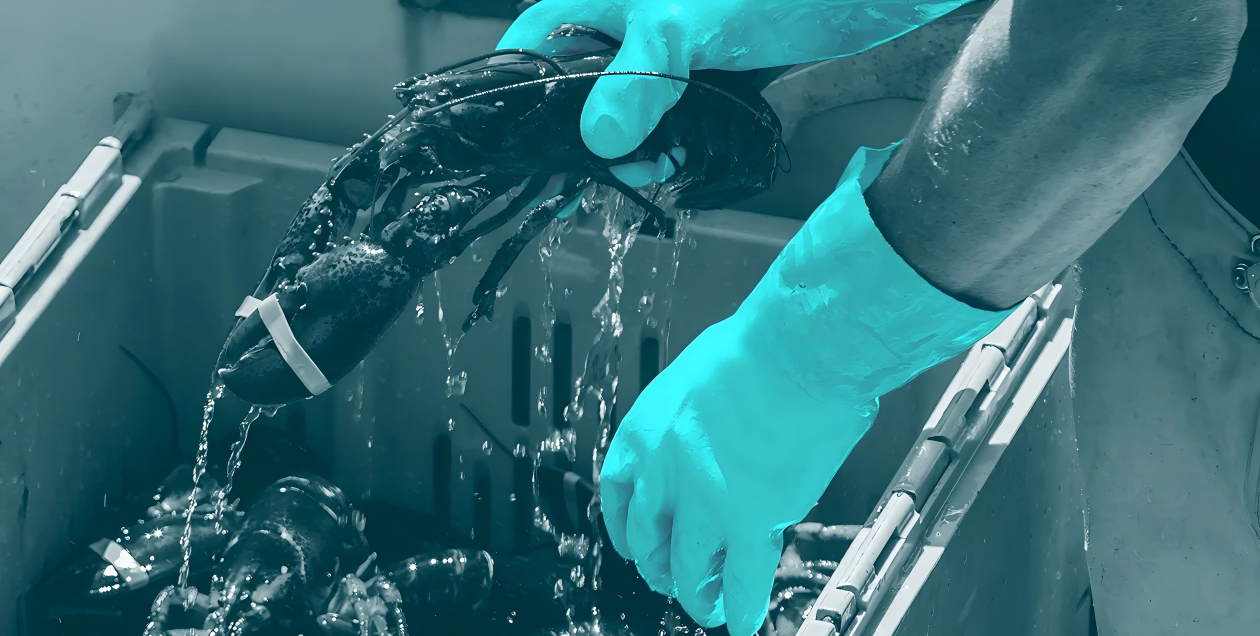
ニトリル手袋
ニトリル手袋 are made by emulsion-polymerizing acrylonitrile and butadiene to produce nitrile rubber. Vulcanizing agents, stabilizers, accelerators, and pigments are then added. After molding, vulcanization, washing, and drying, the gloves are demolded into their final form.
Because nitrile is naturally waterproof and oil-resistant, it prevents shrimp juice, fish blood, seawater, and other liquids from penetrating. This protects the skin from softening, cracking, or bacterial growth after prolonged exposure. Additionally, nitrile gloves are chemically resistant, providing strong protection against fish secretions, disinfectants, and other chemicals. They reduce direct hand contact with biological and chemical substances, preventing allergic reactions and food cross-contamination.
When handling large, spiny fish, sharp shrimp shells, or other sharp objects, nitrile gloves outperform latex gloves in cut resistance, tear resistance, abrasion resistance, and durability. They ensure reusability and continuous performance at work—making them ideal for handling fish, sorting, scooping, or processing seafood.
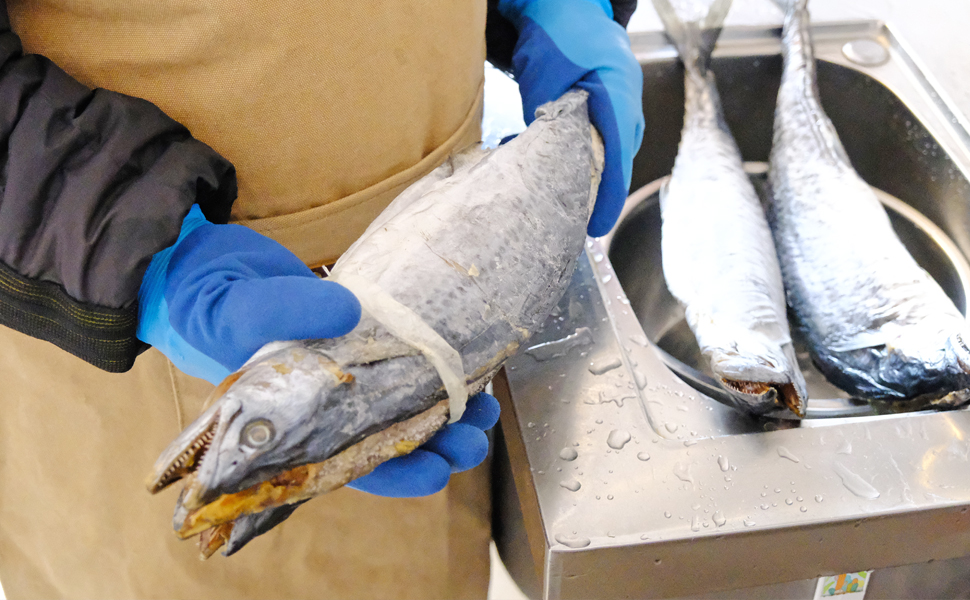
PVC手袋
PVC手袋 are synthetic gloves made by combining thermoplastic polyvinyl chloride with various additives. They are well-known for their structural stability, strong chemical resistance, and waterproof and oil-resistant properties.
Beyond these features, PVC gloves also offer some warmth and cold protection. Although relatively limited, they still help protect hands from low-temperature exposure and reduce the risk of frostbite.
The relatively smooth surface of PVC gloves makes them resistant to dirt adhesion, easy to clean, reusable, and less prone to bacterial growth—helping lower glove usage costs.
Latex-Coated Gloves
ラテックスコーティング手袋 are made from high-performance fibers such as cotton, polyester, or nylon, dipped in natural latex. Compared with ordinary latex gloves, they are thicker, tougher, and often feature additional anti-abrasion coatings or textures on the surface. This design minimizes hand injuries, improves grip in wet environments, reduces slipping risks, and prevents accidents—making them ideal for handling large fish, crabs, shellfish, and other hard-shelled seafood.
Additionally, latex-coated gloves usually include a cotton lining, which offers better warmth to prevent frostbite while improving hand flexibility.

耐切断性手袋
耐切断性手袋 are designed to protect users from sharp objects such as knives, metal, and glass shards. They are typically made from specially reinforced, high-strength materials to effectively resist cuts, abrasions, and punctures. Among all glove types, their cut and puncture resistance is undoubtedly the strongest.
They not only prevent cuts from fish scales, bones, shrimp shells, and shellfish edges but also protect against abrasions and blisters. Cut-resistant gloves are ideal for seafood processing, fishing, and operating fishing vessels.
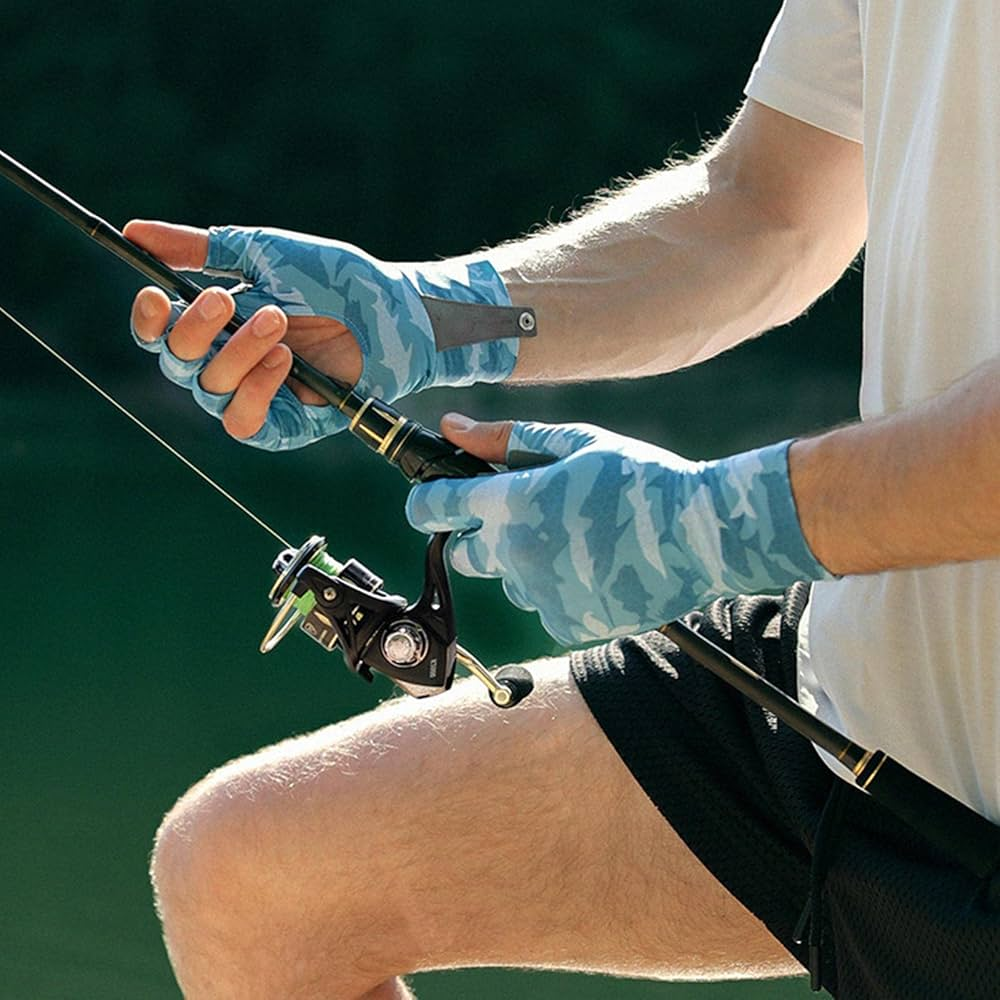
Knitted Gloves
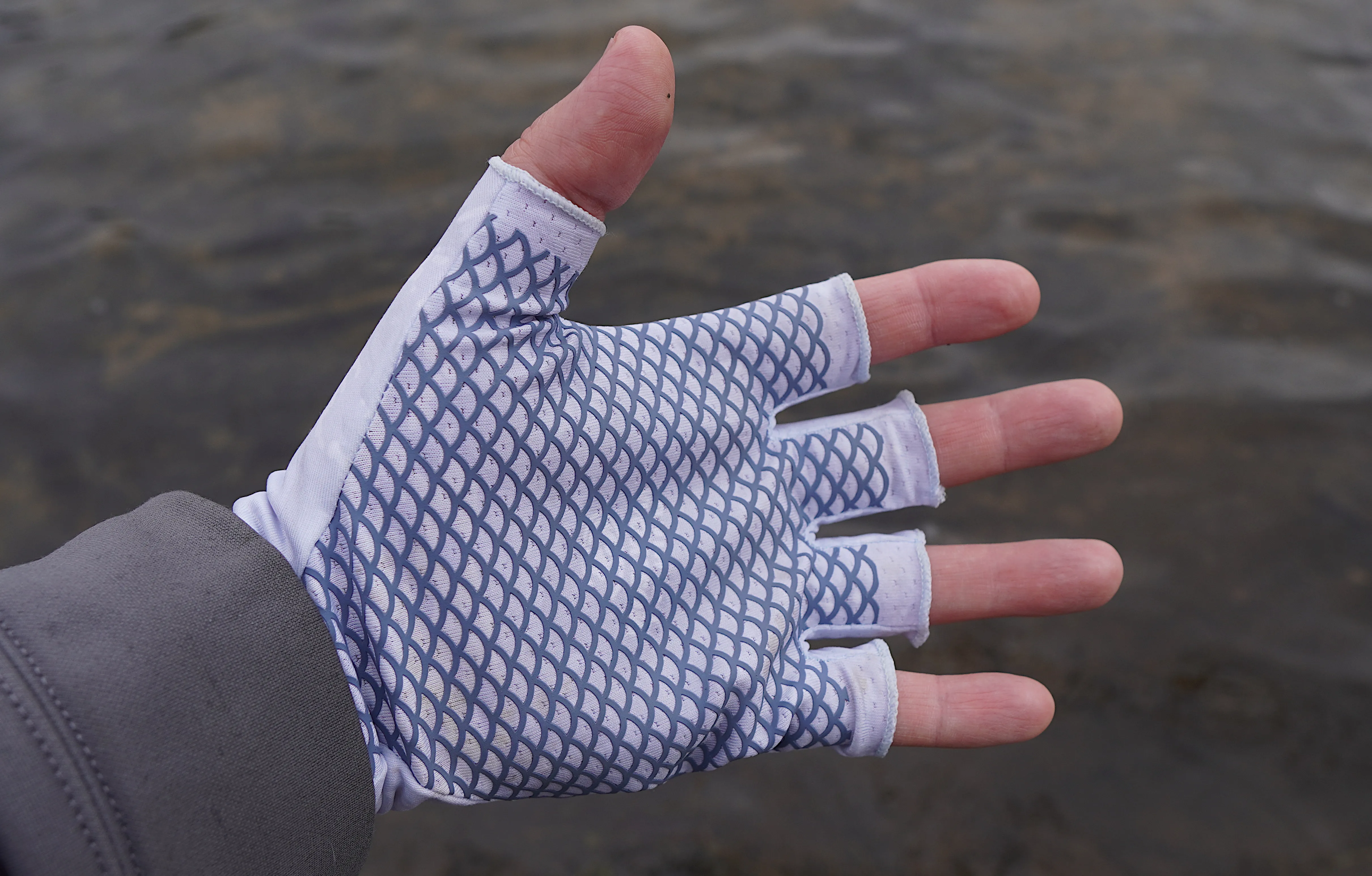
Knitted gloves are usually made from high-quality cotton fibers or yarn. They offer excellent softness and breathability, reducing discomfort caused by friction. While they are neither waterproof nor highly protective, they provide warmth, insulation, and sweat absorption.
Although knitted gloves offer limited protection compared with other types, they can reduce skin damage when handling non-sharp objects. They can also be layered with other gloves, playing an essential role when transporting nets or cleaning fishing gear.
結論
There are many types of gloves suitable for fishery environments. The key is to choose the right gloves based on your working conditions and potential risks. If you are interested in learning more about suitable gloves for fishery use, please contact us as soon as possible—アイボン will fully answer all your glove-related questions.
手袋のサイズの測り方 – 出典:AIBON
ラテックス手袋– 出典:AIBON
安全手袋– 出典:AIBON
作業用手袋– 出典:AIBON
 English
 Spanish
 Hindi
 Portuguese
 German
 Russian
 French
 Korean
 Japanese