


Gloves are essential personal protective equipment across various industries, especially in environments where food handling is required. Wearing suitable gloves not only helps ensure hand safety and hygiene but also reduces the risk of cross-contamination during food handling. Luvas de nitrilo have therefore stood out as a practical choice for food processing and preparation. So, can gloves be used during cooking? Next, we will provide a comprehensive answer to this question.
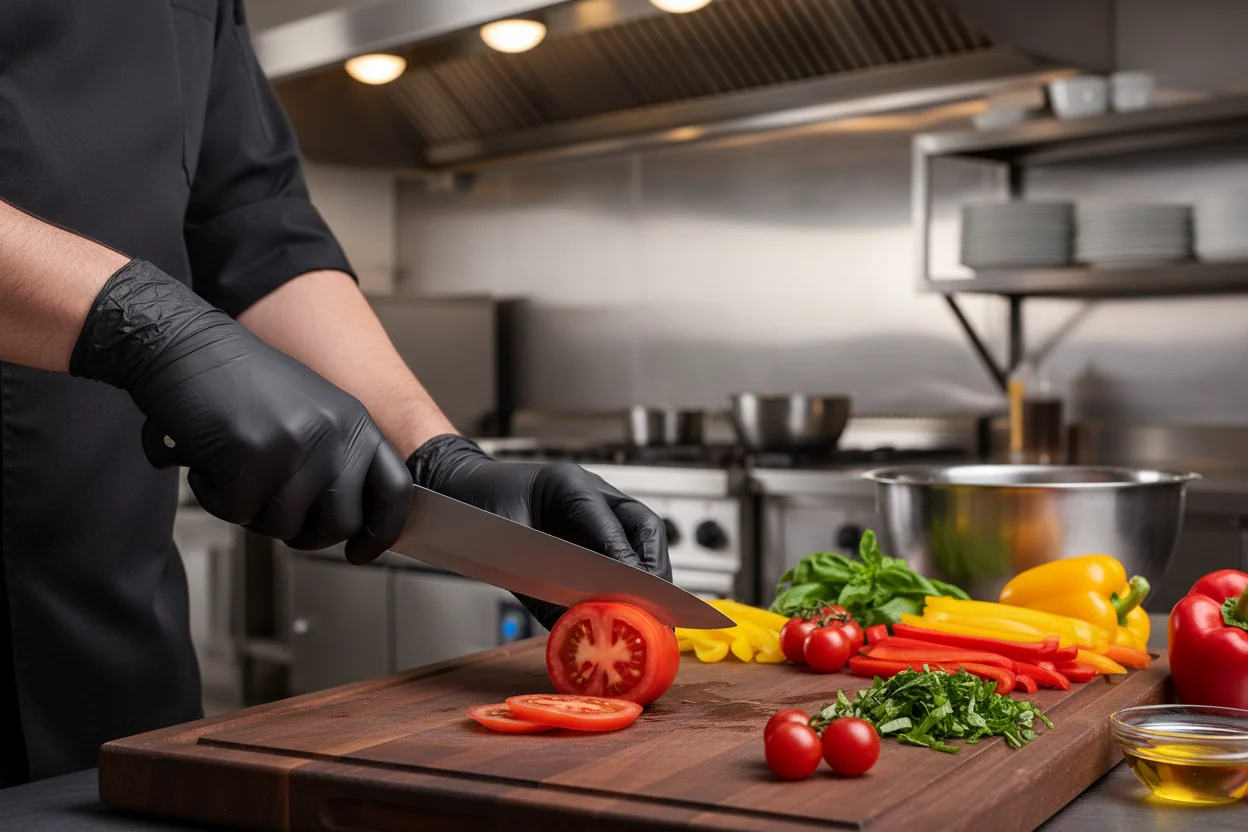
O que são luvas de nitrilo?
Nitrile gloves are primarily made from nitrile synthetic rubber, which is formed through the polymerization of acrylonitrile and butadiene. Other additives, such as vulcanizing agents, stabilizers, accelerators, and pigments, are incorporated into the material. The gloves then undergo processes such as hand-mold forming, vulcanization, washing, and drying before being removed from the molds to produce the finished products.
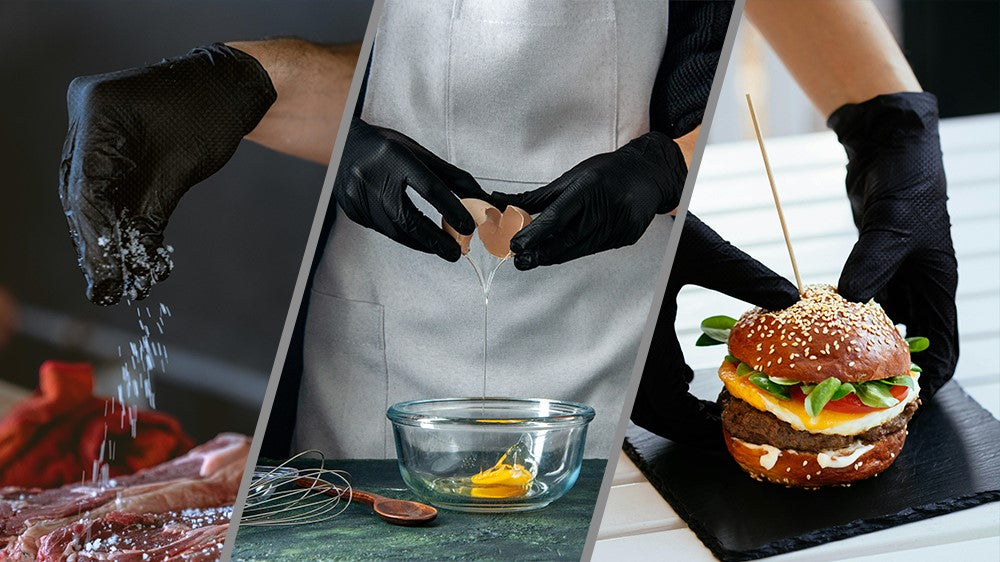
Advantages of Using Nitrile Gloves in Cooking
Excellent Puncture Resistance and Tear Resistance
Nitrile gloves offer excellent puncture resistance and tear resistance, helping protect hands against injuries caused by sharp objects such as knives, shredders, and seafood shells. This helps prevent unnecessary accidents and complications during use, ensures hand safety, and provides greater peace of mind.
Excellent Fit and Flexibility
Nitrile gloves offer an excellent fit and flexibility. They are lightweight and comfortable to wear and can closely follow the contours of the hands, helping improve hand control and allowing the hands to move freely. They also help enhance tactile feedback during tasks, making certain precision operations easier and improving overall work efficiency and convenience.
Ensuring Food Safety and Hygiene
Nitrile gloves create a physical barrier between the hands and food ingredients, reducing direct hand contact with food and lowering the risk of cross-contamination. They help maintain cleanliness and hygiene during food processing and handling, supporting compliance with food safety regulations and hygiene management standards.
Free from Natural Latex
Since nitrile gloves do not contain natural latex, they generally avoid triggering allergic reactions to natural latex and are particularly suitable for people with latex allergies.

Limitations of Using Nitrile Gloves in Cooking
Direct Contact with High-Temperature Food Is Strictly Prohibited
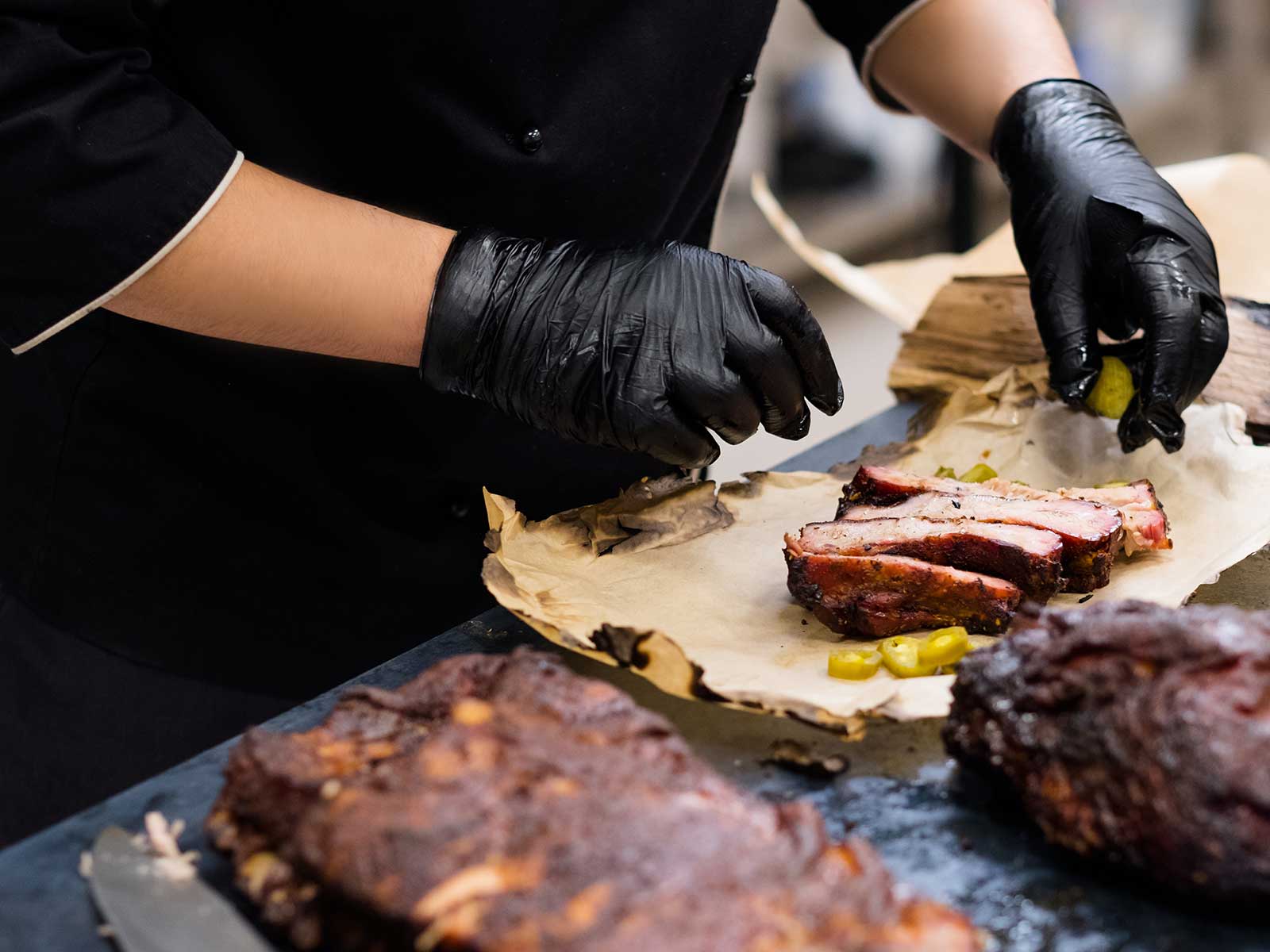
Nitrile gloves have limited heat resistance. Direct contact with hot pans, open flames, baking trays, and other high-temperature objects may cause the glove material to become damaged or deformed, increasing the risk of hand injuries. Therefore, avoid using nitrile gloves when handling high-temperature objects whenever possible. Instead, choose specialized heat-resistant cooking gloves to prevent unnecessary problems.
Prolonged Wear Can Cause Heat and Moisture Buildup
Nitrile gloves are generally lightweight and can fit the contours of the hands closely. However, wearing them for extended periods may cause the hands to sweat and become damp, creating a feeling of heat and stuffiness and resulting in noticeable discomfort.
Suitability for Food Contact Varies Considerably
Different products can vary significantly in their raw materials, additives, and manufacturing processes. Therefore, not all nitrile gloves are suitable for direct food contact. It is important to choose nitrile gloves specifically designed for food contact and compliant with applicable food safety requirements and relevant standards.
Proper Guidelines for Using Nitrile Gloves During Cooking
Choose Nitrile Gloves That Meet Food Safety and Hygiene Requirements
Before cooking, select suitable nitrile gloves according to food hygiene and safety requirements, food contact regulations, and other relevant standards.
Clean Your Hands Before Wearing Gloves
Before putting on nitrile gloves, thoroughly wash your hands with soap and then rinse them under running water. Make sure your hands are completely dry before putting on the gloves to effectively reduce the risk of contaminating the inside of the gloves.
Ensure the Gloves Fit Your Hands Properly After Putting Them On
After putting on nitrile gloves, make sure they fit the contours of your hands properly without restricting movement or circulation. At the same time, the gloves should not be so loose that they slip off, helping prevent unnecessary accidents and maintain hand safety.
Stop Using Gloves Immediately If They Come into Contact with Contaminants
During use, your hands may come into contact with potentially contaminated surfaces, particularly your face, hair, or clothing. If this occurs, stop using the gloves immediately and replace them to prevent contaminants from being transferred to subsequent stages of food handling and causing avoidable problems.
Wash Your Hands Thoroughly After Use
After use, carefully peel the gloves off from the wrist area, avoiding any potential contact with contaminants. Remove the gloves carefully and dispose of them appropriately. Then wash your hands thoroughly under running water to maintain proper hand hygiene.
Perguntas frequentes
How Should Nitrile Gloves Be Stored Before Cooking?
Ideally, follow the supplier’s storage instructions. Keep nitrile gloves in their original packaging or other suitable protective packaging and store them in a cool place, away from high temperatures and direct sunlight.
Do Nitrile Gloves Affect the Taste and Smell of Food?
Generally, no. Whether odors from gloves transfer to food mainly depends on the glove formulation, product quality, and conditions of use. In general, gloves with noticeable odors should not be used if they do not meet applicable food safety requirements and standards.
Are Thicker Nitrile Gloves Better for Food Preparation?
Not necessarily. The appropriate thickness of nitrile gloves should be selected according to your working conditions, application environment, and specific needs.
Does Nitrile Glove Thickness Affect the Cooking Experience?
Yes. Different thicknesses of nitrile gloves can provide different wearing experiences during cooking, thereby affecting overall comfort and ease of handling tasks.
Are Nitrile Gloves Suitable for Handling Acidic Foods?
Whether nitrile gloves are suitable for handling acidic foods mainly depends on the glove formulation, compliance with applicable food contact requirements, and the conditions of use specified by the supplier.
Conclusão
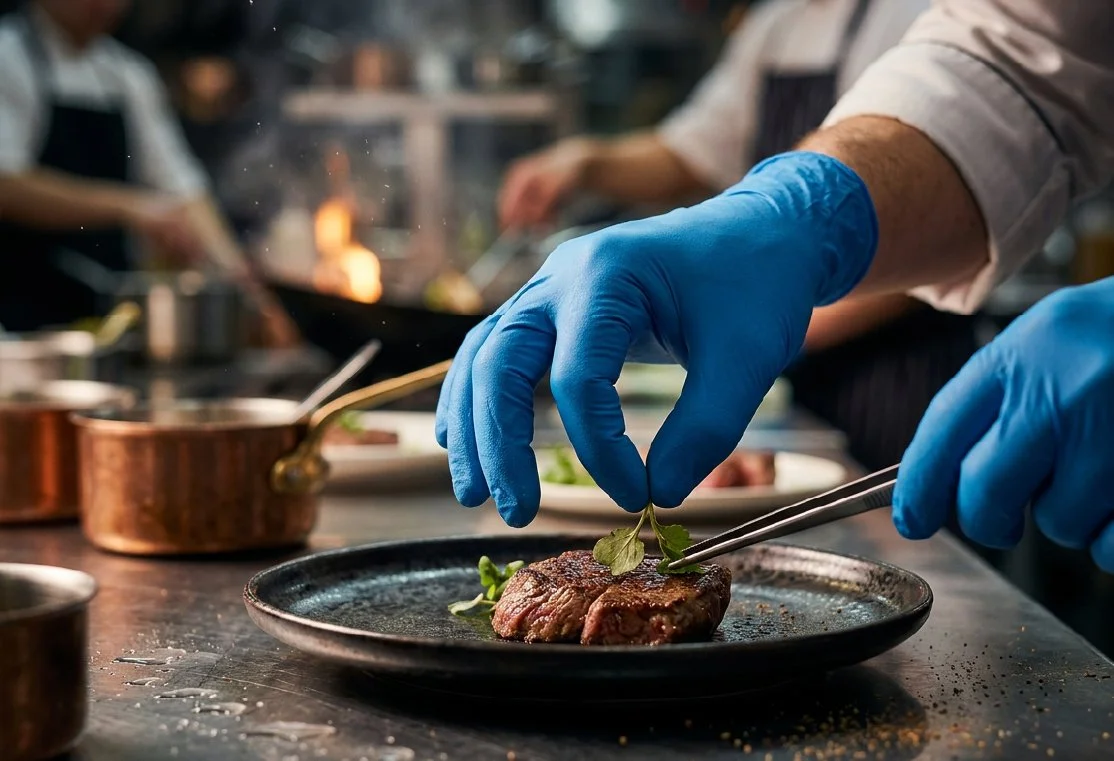
In summary, nitrile gloves offer several useful properties, including chemical resistance and durability, making them a practical option for various cooking environments. However, it is also essential to consider their potential limitations and alternative options based on specific needs and preferences. By following the proper guidelines for using nitrile gloves, you can make informed decisions when selecting suitable gloves and help maintain food safety, hygiene, and personal protection.
If you are interested in nitrile gloves or would like to purchase them, please Contate-nos today. Aibon will provide support throughout the process.
Como medir o tamanho das luvas – Fonte: AIBON
Luvas de látex– Fonte: AIBON
Luvas de segurança– Fonte: AIBON
Luvas de trabalho– Fonte: AIBON
 English
 Spanish
 Hindi
 Portuguese
 German
 Russian
 French
 Korean
 Japanese