


Regardless of when and where, cut-resistant gloves are one of the essential types of hand protection in our daily life and work. However, during the purchasing process, do you really understand the basic parameters and cut-resistant levels of cut-resistant gloves? If you are not familiar with the answers to the above questions, we will provide you with a comprehensive understanding of the international safety standards related to cut-resistant gloves, including ANSI/ISEA 105 and EN 388, helping you gain a deeper understanding of everything about cut-resistant gloves.
Why Are Cut-Resistant Glove Standard Levels Important?
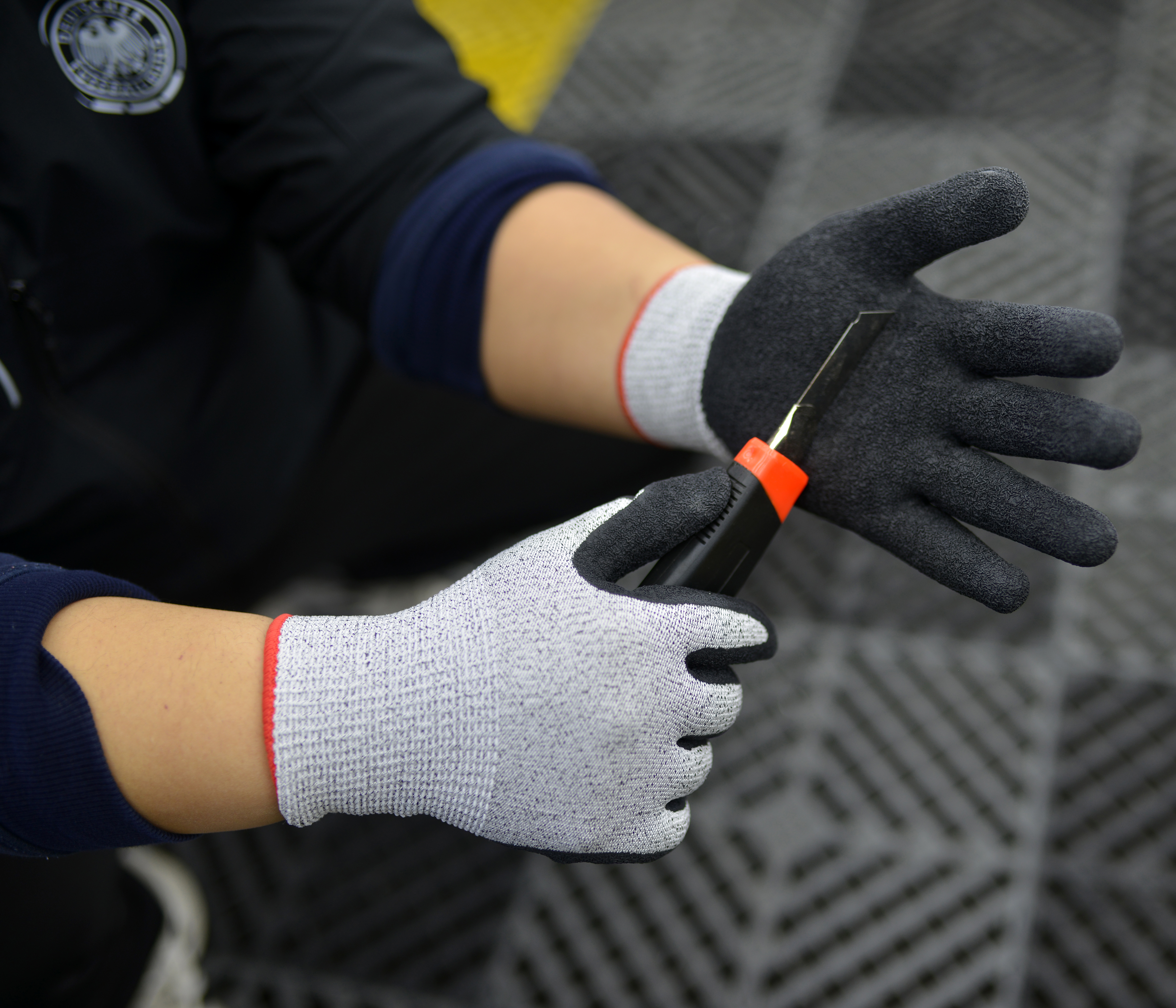
Перчатки, устойчивые к порезам are specifically designed to protect hands from injuries caused by sharp and pointed objects. The cut-resistant glove standard level represents the glove’s ability to resist cutting hazards, making it an essential factor in determining whether the gloves can meet your requirements and adapt to your working environment.
However, not all cut-resistant gloves provide the same level of protection. Different working environments involve different levels of cutting risks, which means that a higher cut-resistant level does not always mean better protection. Instead, it is important to find the most suitable cut-resistant gloves and the appropriate cut-resistant glove standard level for your specific needs. Therefore, selecting the correct and suitable cut-resistant glove standard level is extremely important.

What Is the ANSI/ISEA 105 Cut-Resistant Glove Standard?
Generally, cut-resistant glove standard levels are divided into two main systems: ANSI/ISEA 105 and EN 388. ANSI/ISEA 105 is a national hand protection safety standard developed by the American National Standards Institute (ANSI) and the International Safety Equipment Association (ISEA). It mainly evaluates the ability of cut-resistant gloves to withstand cutting hazards through the TDM-100 test method.
This test method mainly uses a blade to cut and scratch the surface of glove materials to measure the force required to cut through the glove. Based on the test results, the cut-resistant performance of gloves is classified into nine levels, from A1 to A9. The higher the ANSI cut level, the stronger the glove’s resistance to cutting, and vice versa.
ANSI Cut Levels A1-A9 Explained
| ANSI Cut Level | Уровень защиты | Common Applications |
|---|---|---|
| А1 | Basic cut protection | General handling, light assembly |
| А2 | Moderate protection | Warehouse operations, packaging |
| А3 | Medium protection | Automotive assembly, maintenance work |
| А4 | High protection | Metal handling, industrial applications |
| А5 | Higher protection | Glass handling, sheet metal work |
| А6 | Very high protection | Тяжелое производство |
| А7 | Extreme protection | High-risk industrial applications |
| А8 | Extreme protection | Heavy cutting environments |
| А9 | Максимальная защита | Specialized high-risk operations |

What is the EN 388 Cut-Resistant Glove Standard?
EN 388 is a standard developed by the European Committee for Standardization to evaluate the mechanical risk performance of protective gloves. Unlike ANSI/ISEA 105, which mainly focuses on testing cut resistance levels, EN 388 evaluates multiple mechanical properties of gloves. Among them, cut resistance performance is primarily tested and assessed through the ISO 13997 or Coup Test methods. Based on the test results, protective gloves are classified into six cut-resistant levels from A to F, with F representing the highest level of cut protection.
EN 388 Cut Resistance Levels Explained
| EN 388 Cut Level | Уровень защиты | Typical Applications |
|---|---|---|
| Level A | Low cut protection | Light-duty handling |
| Level B | Moderate protection | General industrial work |
| Level C | Medium protection | Assembly and manufacturing |
| Level D | High protection | Metal processing, glass handling |
| Level E | Very high protection | Heavy industrial applications |
| Level F | Максимальная защита | Extreme cutting risks |
Gloves tested according to the EN 388 standard will have a set of numbers and letters marked on the glove surface, for example: 4X43C.
Each character represents a different performance level:
4 – Abrasion resistance
X – Blade cut resistance (not tested or not applicable)
4 – Tear resistance
3 – Puncture resistance
C – ISO cut resistance level
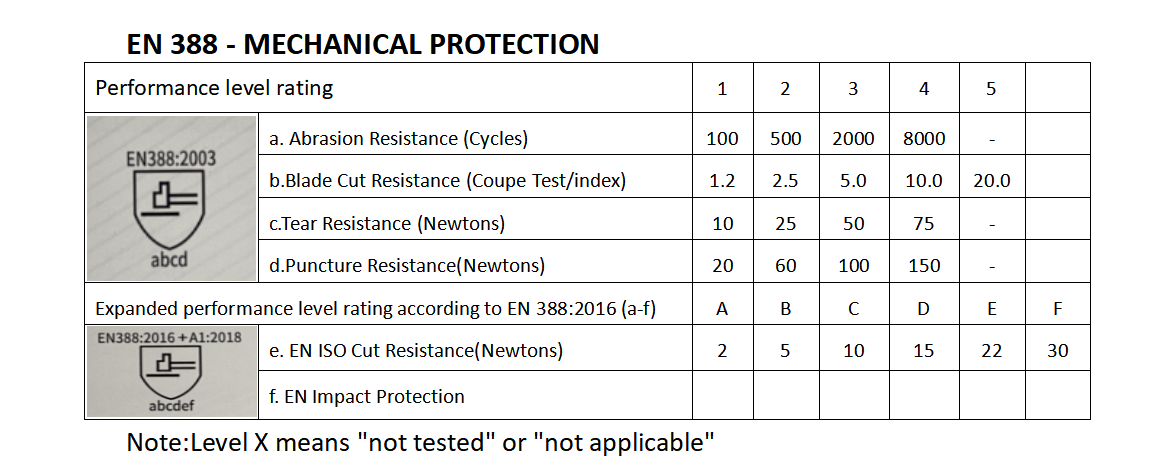
Compared with ANSI/ISEA 105, EN 388 provides a more comprehensive evaluation of mechanical protection. It not only helps you understand the glove’s cut resistance performance but also provides information about other important mechanical protection indicators.
What Are the Differences Between ANSI/ISEA 105 and EN 388?
Although both ANSI/ISEA 105 and EN 388 are used to evaluate the cut resistance performance of protective gloves, they use different testing methods and rating systems. In addition, they are designed for different target markets and regions. Therefore, when selecting cut-resistant gloves, it is important to understand the regulations and requirements for protective gloves in your specific region or country.
| ANSI/ISEA 105 | EN 388 | |
|---|---|---|
| Main Market | North America | Europe and international markets |
| Cut Rating System | A1-A9 | АФ |
| Testing Method | TDM-100 | ISO 13997 / Coup Test |
| Main Purpose | Classify glove performance | Evaluate mechanical protection |
| Common Users | US buyers and distributors | European buyers and distributors |

Final
Understanding the international cut-resistant glove standards, ANSI/ISEA 105 and EN 388, can help you make more informed decisions when selecting cut-resistant gloves, ensuring that you choose gloves that are suitable for your needs and provide effective protection for your hands. As an experienced cut-resistant glove manufacturer, Aibon is committed to providing you with exceptional service and reliable protection. Choosing us will be a valuable decision for your hand protection needs.
If you still have questions about cut-resistant glove ratings or need help selecting the right cut-resistant gloves for your application, please feel free to связаться с нами. Aibon will recommend the most suitable cut-resistant gloves based on your specific requirements!
Как определить размер перчаток – Источник: AIBON
Какие существуют разные уровни защиты от порезов у перчаток?– Источник: AIBON
Перчатки с защитой от порезов– Источник: AIBON
Рабочие перчатки– Источник: AIBON
 English
 Spanish
 Hindi
 Portuguese
 German
 Russian
 French
 Korean
 Japanese