


Common materials for welding gloves include high-quality leathers such as cowhide, pigskin, and goatskin, as well as high-temperature resistant materials like Kevlar. The lining often uses fire-resistant fibers or added insulation layers to ensure the gloves provide effective heat protection and prevent unnecessary harm to the hands.

Custom Welding Gloves Manufacturer in China
A welding glove is used to keep the welder’s hand from hazards. It enables digit articulation while keeping the operator from heat, radiation, and electric shock. This hand-protective equipment can also provide excellent resistance to abrasion and improved grip.
Aibon is a professional welding glove manufacturer in China with more than ten years of experience. We use high-quality materials that are nonconductive, strong, and can dissipate well with heat. These could ensure gloves with the highest level of protection.
At Aibon, you can find the best hand-protective gloves for welding made of different materials. You can also select custom and standard sizes, thicknesses, colors, and features. Please send us your drawings now! Our expert team can do the rest for you, from designing and manufacturing to shipping.
Types of Welding Gloves

TIG Welding Gloves
It is commonly fabricated from the hides of pigs, cows, and goats. These gloves can provide an excellent sensitivity of fingers with sufficient protection.

MIG Welding Gloves
Our protective gloves for MIG welding provide a high level of protection with dexterity. It is commonly made of deer, pig, and cowhides.

Stick Welding Gloves
Aibon stick welding gloves are manufactured from elk and cowhides. Therefore, this is the most durable type of glove for welding.
3 Produkte gefunden.
Materials
 Goatskin
- Thin yet durable
- Greater mobility
- They reduce heat transfer, lowering the risk of hand injuries.
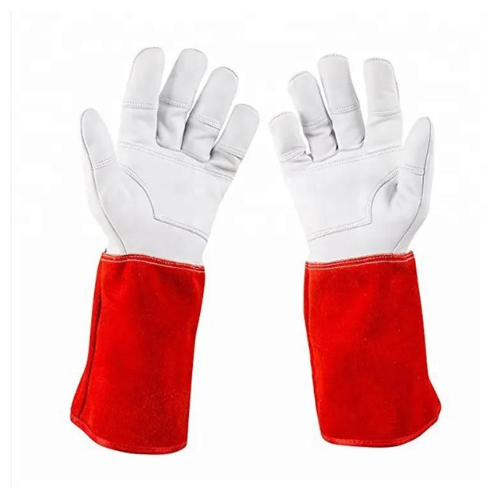 Kidskin
- Soft and thin
- Manufactured from younger goat’s skin
- Durable and thick, with a long service life.Protects the hands and ensures safety.
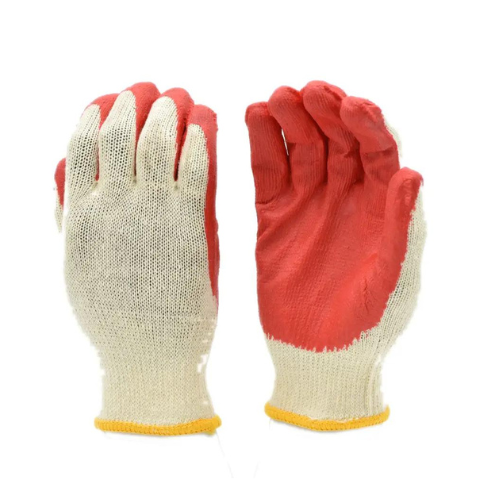
 Latex
- Flame-resistant
- Can handle sharp materials
- They have excellent anti-slip and tear-resistant properties.
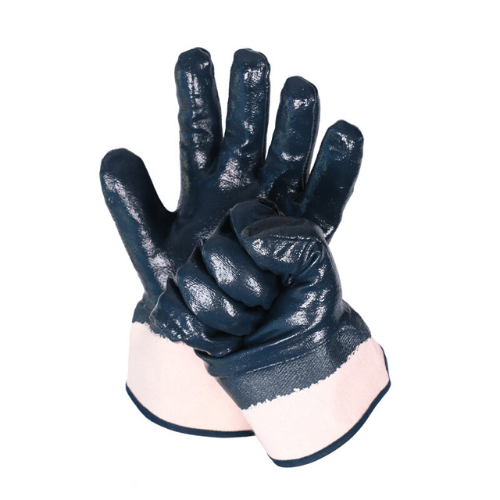 Nitril
- Protects against hazardous chemicals
- Heat, fire, cut-resistant
- Lightweight and soft, offering excellent flexibility.
 Acrylic
 welding gloves, combined with various materials to make a finished product, can effectively resist sparks and minor abrasion, providing basic hand protection.Thus, it extends the service life of the gloves.
Why Choose Aibon Welding Gloves
- Additional Leather: This feature can combat the high level of failure.
- Double Stitched: Increases the welding glove’s lifespan and flexibility.
- Insulation: Made of foam, aluminized, and fleece liner for excellent hand protection.
- Comfortable: Our welding gloves come in a universal size.

Normen
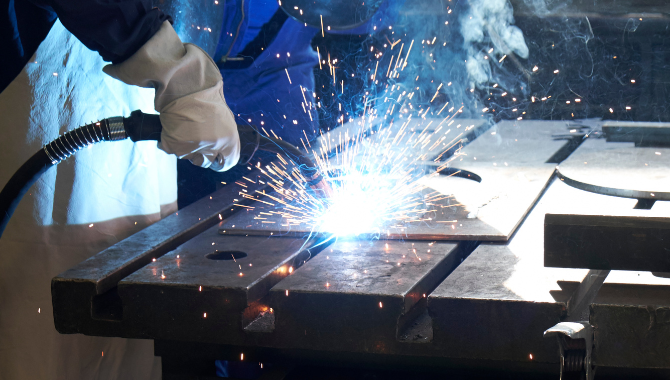
Aibon welding gloves are manufactured in accordance with BS EN12477 standards. This specification provides complete recommendations with respect to the following:
- Electrical-resistant
- Abriebfest
- Cut-resistant
- Burn behavior
- Heat-resistant
- Geschicklichkeit
What materials are typically used for welding gloves?
What is the heat resistance temperature of welding gloves?
The heat resistance of welding gloves varies depending on their material and thickness. Standard welding gloves can withstand temperatures of 200–250°C, while thickened gloves can reach 300–500°C.。
Are welding gloves fire-resistant and splash-proof?
Can welding gloves withstand extremely high-temperature flames?
Are welding gloves cut-resistant and puncture-resistant?
Are there specialized welding gloves for arc protection or welding splatter?
Of course. If you need specialized gloves designed for welding splatter and arc protection, we can recommend suitable options based on your requirements to ensure your hands are fully protected.
Are there welding gloves specifically designed for anti‑vibration or protection against mechanical impact?
Of course. Welding gloves can be designed with thickened palms or added shock‑absorbing linings to provide anti‑vibration and impact protection.
Welche Qualitätsprüfungen führen Sie durch?
Bei Aibon legen wir großen Wert auf die Produktqualität. In jeder Phase des Produktionsprozesses führen unsere gut geschulten Mitarbeiter zahlreiche Kontrollen durch. Unsere Maschinen und Anlagen werden streng geprüft, und wir verfügen über alle relevanten Qualitätszertifikate.
Wie hoch ist die Mindestbestellmenge (MOQ) für Schutzhandschuhe?
Bei Standardmodellen haben wir in der Regel Lagerbestände vorrätig. Bei kundenspezifischen Produkten muss die Mindestbestellmenge auf der Grundlage der konkreten Anforderungen noch näher besprochen werden.
Which automated or semi-automated welding equipment operations are welding gloves suitable for?
Ähnliche Produkte


Factors to Consider When Choosing Welding Gloves
Welding Process
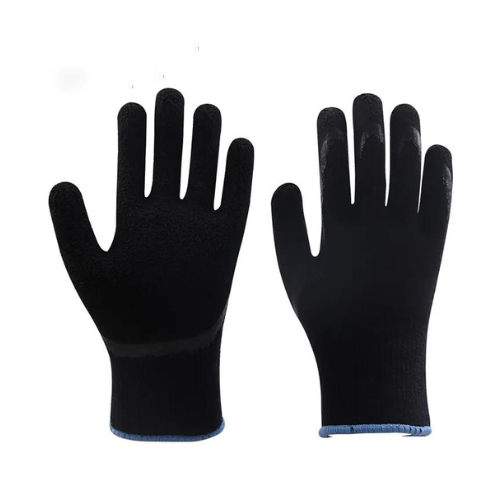
All welding processes such as MIG, TIG, and SMAW can create different heat levels. TIG welding can produce lower heat. So, thinner gloves can be used.
When it comes to the MIG, it can produce more heat. Therefore, suitable gloves for this job should have more material layers.
On the other hand, the SMAW process produces a high level of heat, and dexterity is required. Therefore, suitable gloves must have a combination of versatility and heat-resistant.
Materials
Most hand-protective gloves for welding use animal skins for the outer layer. The thickest material is cowhide, ideal for MIG welding but hard for TIG. However, the goatskin material has a different heat level of protection compared to leather. But it is versatile and ideal for TIG welding.
Heat Resistance
Heat-resistant welding gloves are very important for welding work. Adding extra layers can increase its resistance to heat.
Heat resistance determines the gloves’ longevity in contact with heat. Welding gloves usually resist short-term contact with heated metals of 2,000°F.
Senden Sie Ihre Anfrage noch heute
 English
 Spanish
 Hindi
 Portuguese
 German
 Russian
 French
 Korean
 Japanese