


Whether in the workplace or in daily life, you are likely to encounter chemicals and organic solvents such as acids, alkalis, and oils. Therefore, in order to prevent your hands from being corroded and harmed when coming into contact with chemicals, you need to wear suitable personal protective equipment that can resist chemical damage to ensure hand safety. So, which gloves have the ability to resist chemical corrosion? Don’t worry. Next, we will provide you with a comprehensive understanding of the chemical resistance capabilities of various common work gloves, hoping to help you choose the most suitable gants de travail.
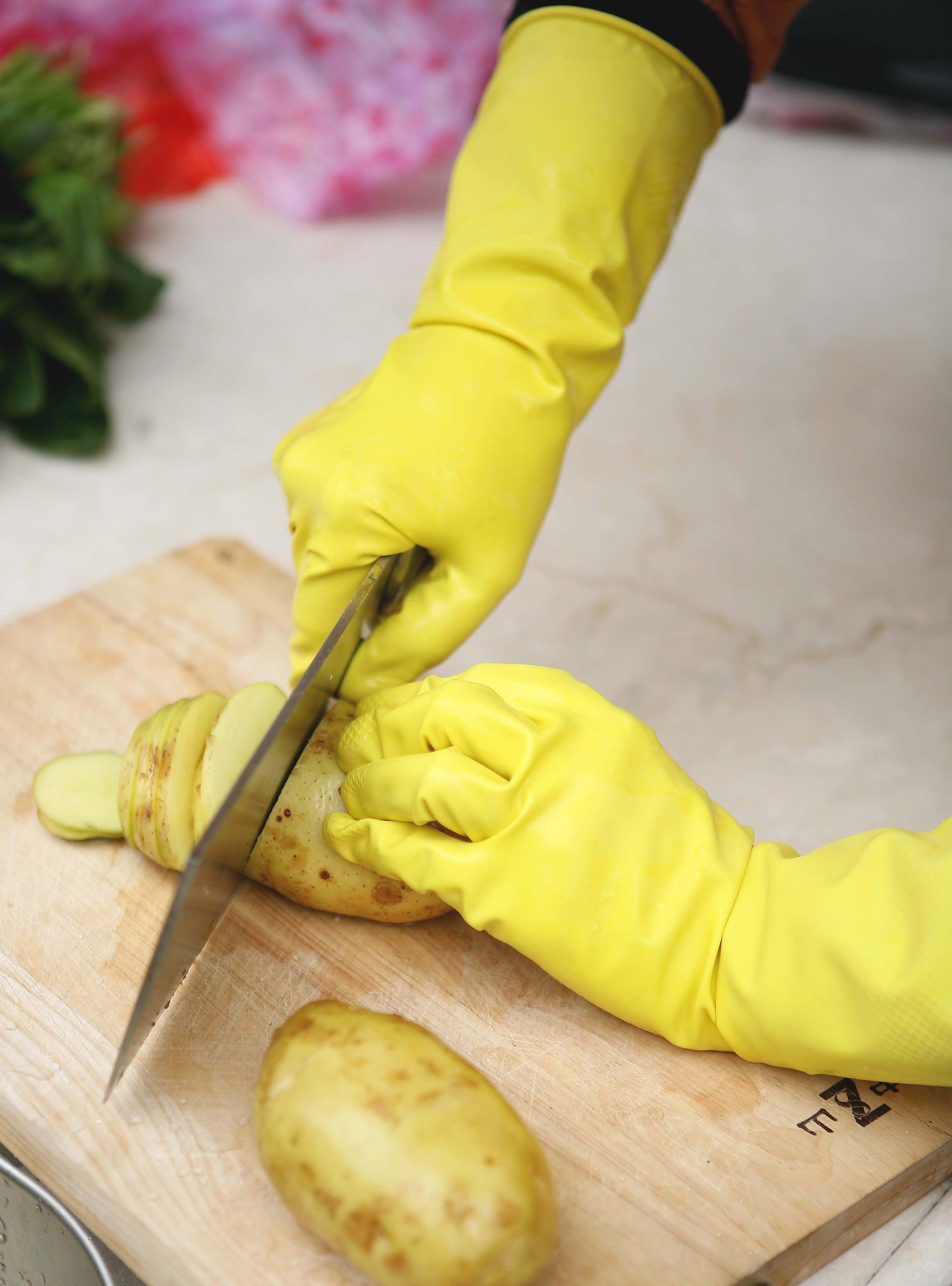
Gants en latex
Gants en latex are made from the sap extracted from Brazilian rubber trees. After a series of delicate processing and treatments such as filtration and the addition of mixed chemical additives, the material is coated onto glove molds, heated and cured, cleaned, and rinsed, eventually forming the final product. They are a combination of natural latex and synthetic materials.
Latex gloves have excellent resistance to low-concentration acids and alkalis such as hydrochloric acid, sulfuric acid, sodium hydroxide, and potassium hydroxide, as well as water-based chemicals such as cleaners, detergents, and soap solutions. However, they are not suitable for contact with oils and organic solvents such as acetone, toluene, gasoline, diesel, and lubricating oil, as well as high-concentration acids and alkalis such as concentrated nitric acid and bleach. These chemicals can cause latex gloves to swell and soften, resulting in hand safety issues. Please choose and use them carefully, avoid misuse, and prevent unnecessary trouble.
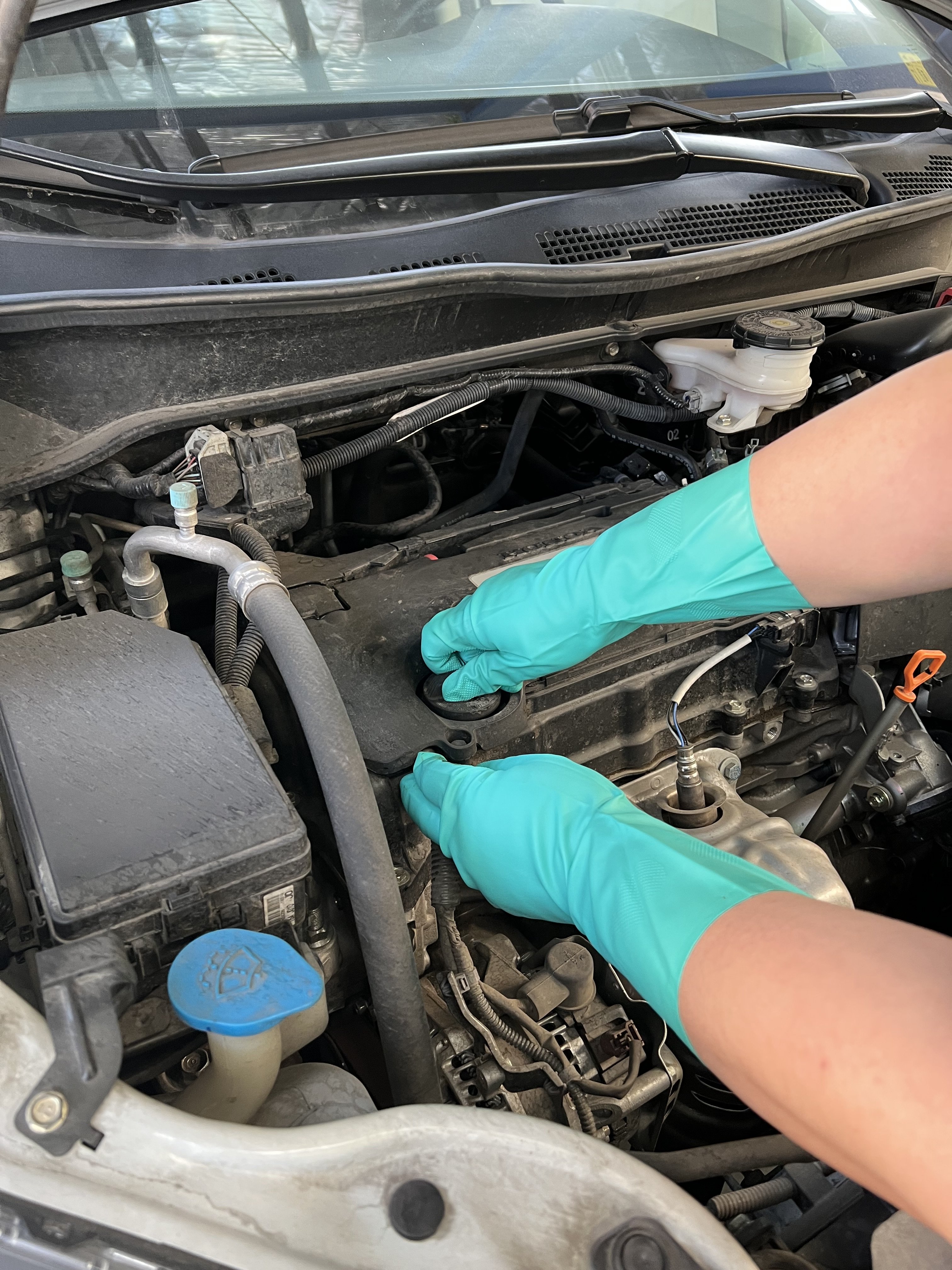
Gants en nitrile
Gants en nitrile are mainly produced by polymerizing acrylonitrile and butadiene into nitrile rubber through emulsion polymerization. Vulcanizing agents, stabilizers, accelerators, pigments, and other additives are then added, followed by hand mold forming, vulcanization, cleaning, drying, and final demolding.
Nitrile gloves can effectively resist oils such as gasoline, diesel, ethanol, and isopropyl alcohol, as well as certain organic solvents and corrosive substances such as acids and alkalis. They are simply the “MVP” of chemical-resistant protective products. Not only do they offer excellent chemical resistance, but they also provide a certain level of tear resistance and durability, helping to extend the service life of the gloves. However, they are not suitable for use with strong solvents such as acetone, toluene, and concentrated nitric acid.
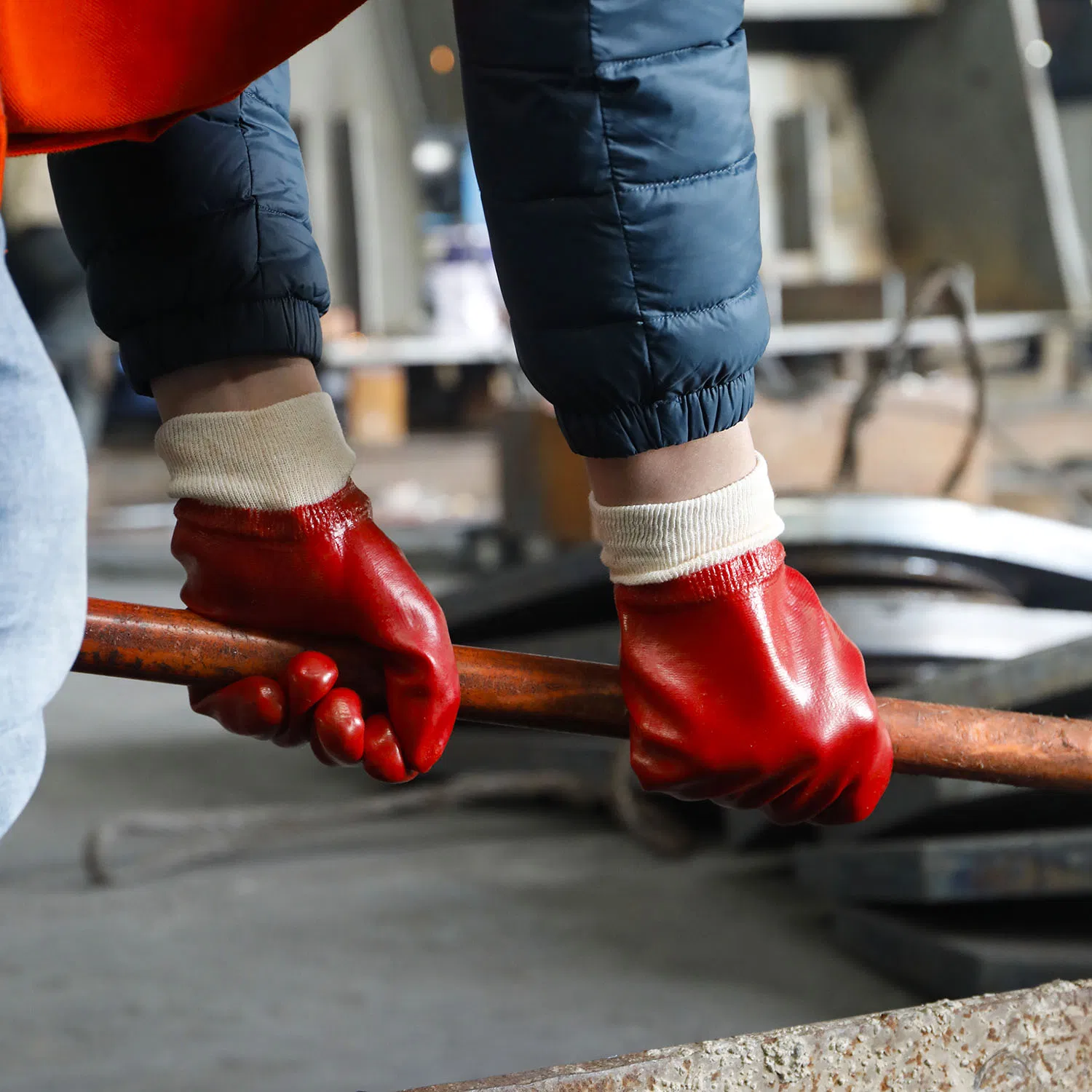
Gants en PVC
Gants en PVC are plastic protective gloves made primarily from polyvinyl chloride resin, combined with plasticizers, stabilizers, and special functional additives.
PVC gloves can effectively resist low-concentration chemicals such as hydrochloric acid, sulfuric acid, potassium hydroxide, and sodium hydroxide, as well as oils and water-based chemicals including animal and vegetable oils, lubricating oil, cleaners, and detergents. However, they are not suitable for prolonged contact with strong organic solvents and aromatic hydrocarbons such as acetone, toluene, and chloroform, as well as certain chlorinated solvents.
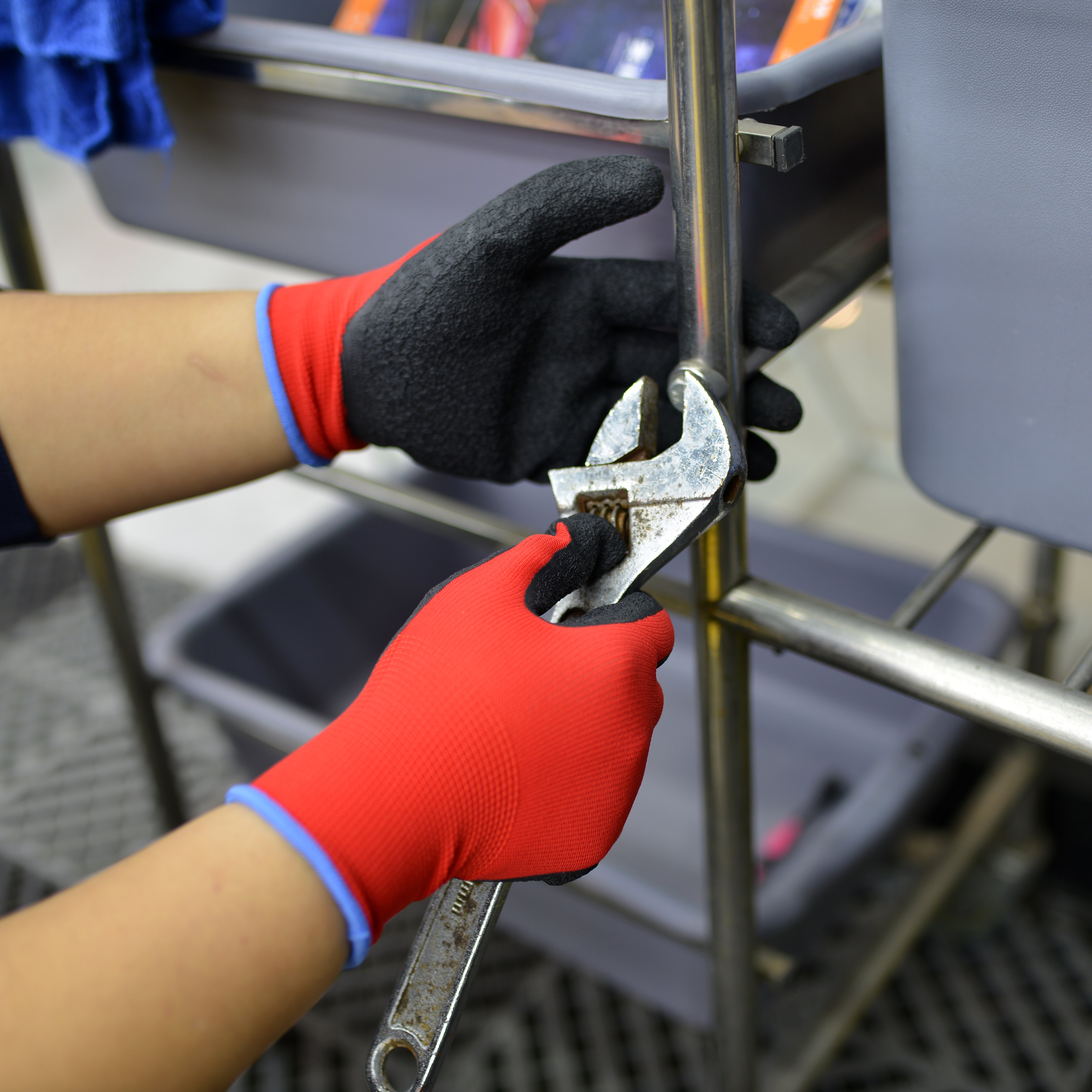
Gants enduits de latex
Latex coated gloves are mainly made by combining a knitted liner with a natural latex coating. The knitted liner not only comes in many varieties, but also serves as the basic structure of the glove, while the latex coating is the core protective material of the outer layer.
Latex coated gloves have certain resistance to low-concentration acids, alkalis, and water-based chemicals such as diluted hydrochloric acid, diluted sulfuric acid, potassium hydroxide, cleaners, and detergents, making them suitable for daily work. However, like latex gloves, they are not recommended for contact with high-strength solvents such as gasoline, diesel, concentrated nitric acid, and acetone in order to ensure hand safety.

Gants enduits de nitrile
Gants enduits de nitrile are also made by combining a knitted liner with nitrile synthetic rubber. The nitrile coating serves as the core protective layer of the outer surface, so their essential structure is similar to latex coated gloves.
Nitrile coated gloves can effectively resist lubricating oil, diesel, gasoline, diluted hydrochloric acid, diluted sulfuric acid, detergents, ethanol, and other low-concentration acids, alkalis, oils, and organic solvents. However, they are not recommended for contact with hazardous chemicals such as acetone, toluene, and strong oxidizing agents in order to ensure hand safety.

Conclusion
Each type of work glove has different levels of chemical resistance. You need to fully understand their properties before choosing the most suitable work gloves for your needs. This is the first step toward ensuring safe and efficient work. Trust me, making the right choice will never leave you at a disadvantage, and your hands will thank you in the future.
If you are interested in the chemical resistance performance of work gloves or would like to purchase gloves, please contactez-nous as soon as possible. We will provide you with full support and professional service throughout the entire process!
Comment mesurer la taille des gants – Source : AIBON
Gants en latex– Source : AIBON
Gants de sécurité– Source : AIBON
Gants de travail– Source : AIBON
FAQ
Quel est le délai de livraison après avoir passé une commande de gants de travail personnalisés ?
Lorsque vous passez une commande groupée de gants de travail personnalisés, nous vous demanderons de nous communiquer votre adresse de livraison. Celle-ci déterminera le délai de livraison de vos articles.
Délai de livraison estimé :
Envoi express par avion : 10 jours ouvrés.
Fret aérien économique : 10 jours ouvrés.
Transport ferroviaire : 2 mois.
Fret maritime : 4 à 5 semaines.
Veuillez contacter notre service client pour lui fournir toutes les informations nécessaires concernant votre commande de gants de travail.
Puis-je retourner les produits en cas de problèmes de qualité ?
Si vous constatez un problème de qualité, veuillez contacter notre service après-vente. Nous évaluerons la situation en fonction des informations précises que vous nous fournirez et prendrons la décision qui s'impose.
What is the lead time for customized glove orders?
The standard production cycle for gloves is 30–60 days. Large-volume orders typically require 60–90 days. However, we can offer expedited production services to meet your timeline. Please note that the above timeframes do not include shipping time. The production cycle starts from the confirmation of your final design.
Est-il adapté à une coopération à long terme et à des achats en grand volume ?
Oui. Aibon personnalise des solutions dédiées pour chaque client afin de garantir un approvisionnement stable et à long terme en gants de sécurité. Nous prenons également en charge les commandes d'achats annuelles, offrant un service fiable et de haute qualité tout au long de l'année.
Quels sont les conditions et les modes de paiement ?
Nous préférons le virement bancaire sur le compte bancaire de notre entreprise. Nous acceptons également PayPal, le virement télégraphique (T/T), le crédit documentaire (L/C), Alibaba, Alipay, WeChat Pay et les paiements sur des comptes bancaires personnels.
 English
 Spanish
 Hindi
 Portuguese
 German
 Russian
 French
 Korean
 Japanese