


Whether in the workplace or in daily life, you are likely to encounter chemicals and organic solvents such as acids, alkalis, and oils. Therefore, in order to prevent your hands from being corroded and harmed when coming into contact with chemicals, you need to wear suitable personal protective equipment that can resist chemical damage to ensure hand safety. So, which gloves have the ability to resist chemical corrosion? Don’t worry. Next, we will provide you with a comprehensive understanding of the chemical resistance capabilities of various common work gloves, hoping to help you choose the most suitable Arbeitshandschuhe.
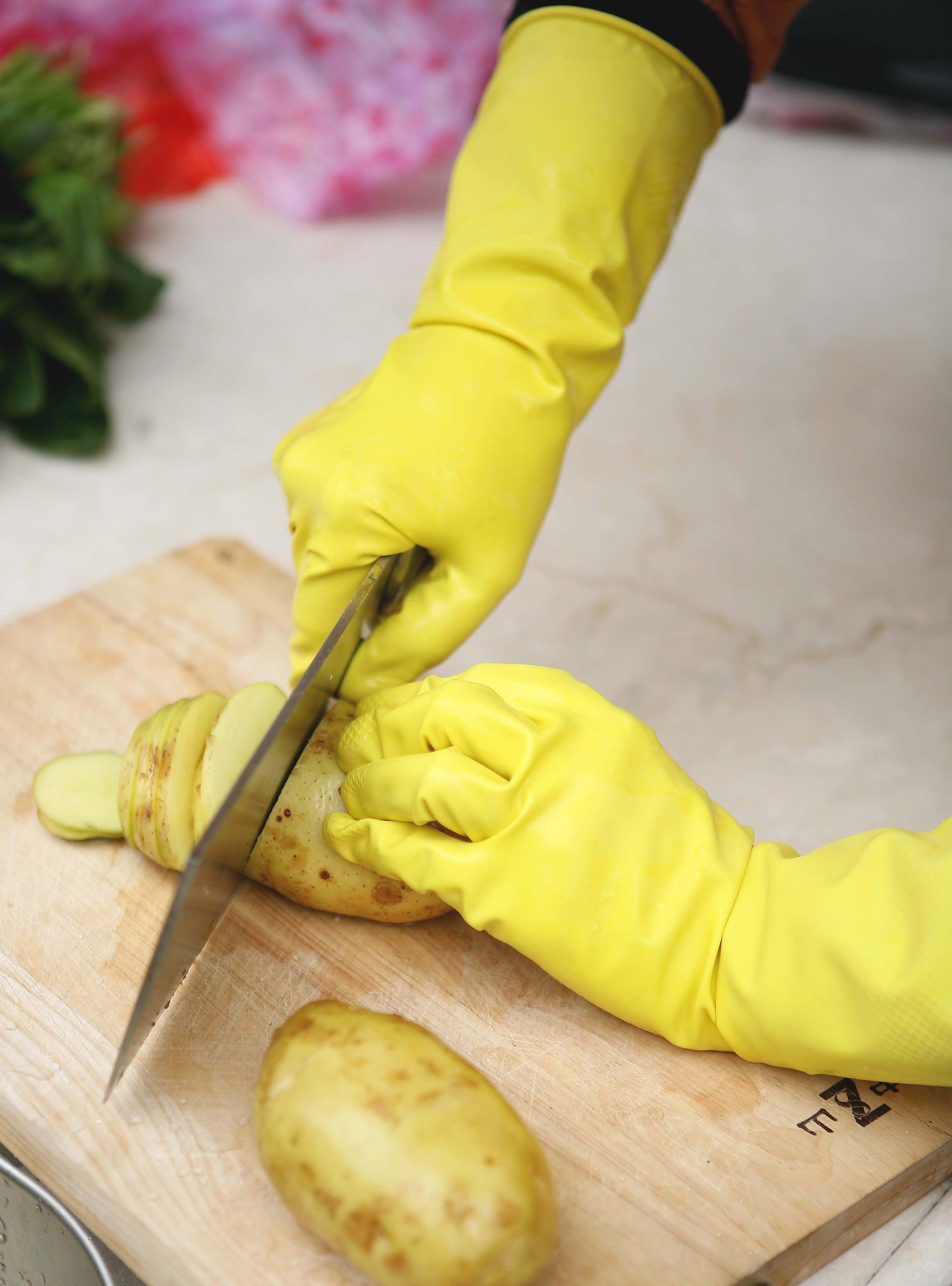
Latex கையுறைகள்
Latex-Handschuhe are made from the sap extracted from Brazilian rubber trees. After a series of delicate processing and treatments such as filtration and the addition of mixed chemical additives, the material is coated onto glove molds, heated and cured, cleaned, and rinsed, eventually forming the final product. They are a combination of natural latex and synthetic materials.
Latex gloves have excellent resistance to low-concentration acids and alkalis such as hydrochloric acid, sulfuric acid, sodium hydroxide, and potassium hydroxide, as well as water-based chemicals such as cleaners, detergents, and soap solutions. However, they are not suitable for contact with oils and organic solvents such as acetone, toluene, gasoline, diesel, and lubricating oil, as well as high-concentration acids and alkalis such as concentrated nitric acid and bleach. These chemicals can cause latex gloves to swell and soften, resulting in hand safety issues. Please choose and use them carefully, avoid misuse, and prevent unnecessary trouble.
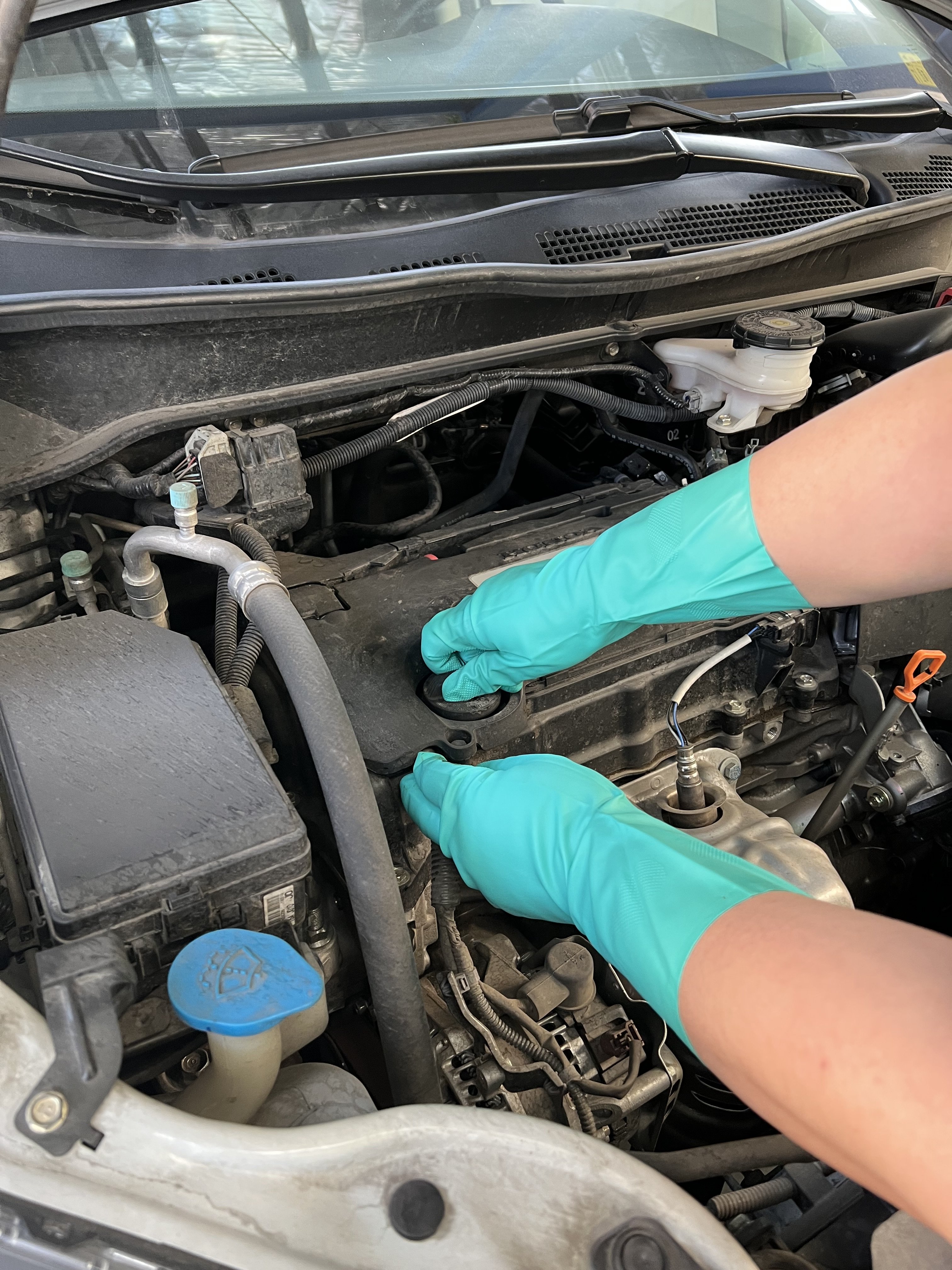
Nitrilhandschuhe
Nitrilhandschuhe are mainly produced by polymerizing acrylonitrile and butadiene into nitrile rubber through emulsion polymerization. Vulcanizing agents, stabilizers, accelerators, pigments, and other additives are then added, followed by hand mold forming, vulcanization, cleaning, drying, and final demolding.
Nitrile gloves can effectively resist oils such as gasoline, diesel, ethanol, and isopropyl alcohol, as well as certain organic solvents and corrosive substances such as acids and alkalis. They are simply the “MVP” of chemical-resistant protective products. Not only do they offer excellent chemical resistance, but they also provide a certain level of tear resistance and durability, helping to extend the service life of the gloves. However, they are not suitable for use with strong solvents such as acetone, toluene, and concentrated nitric acid.
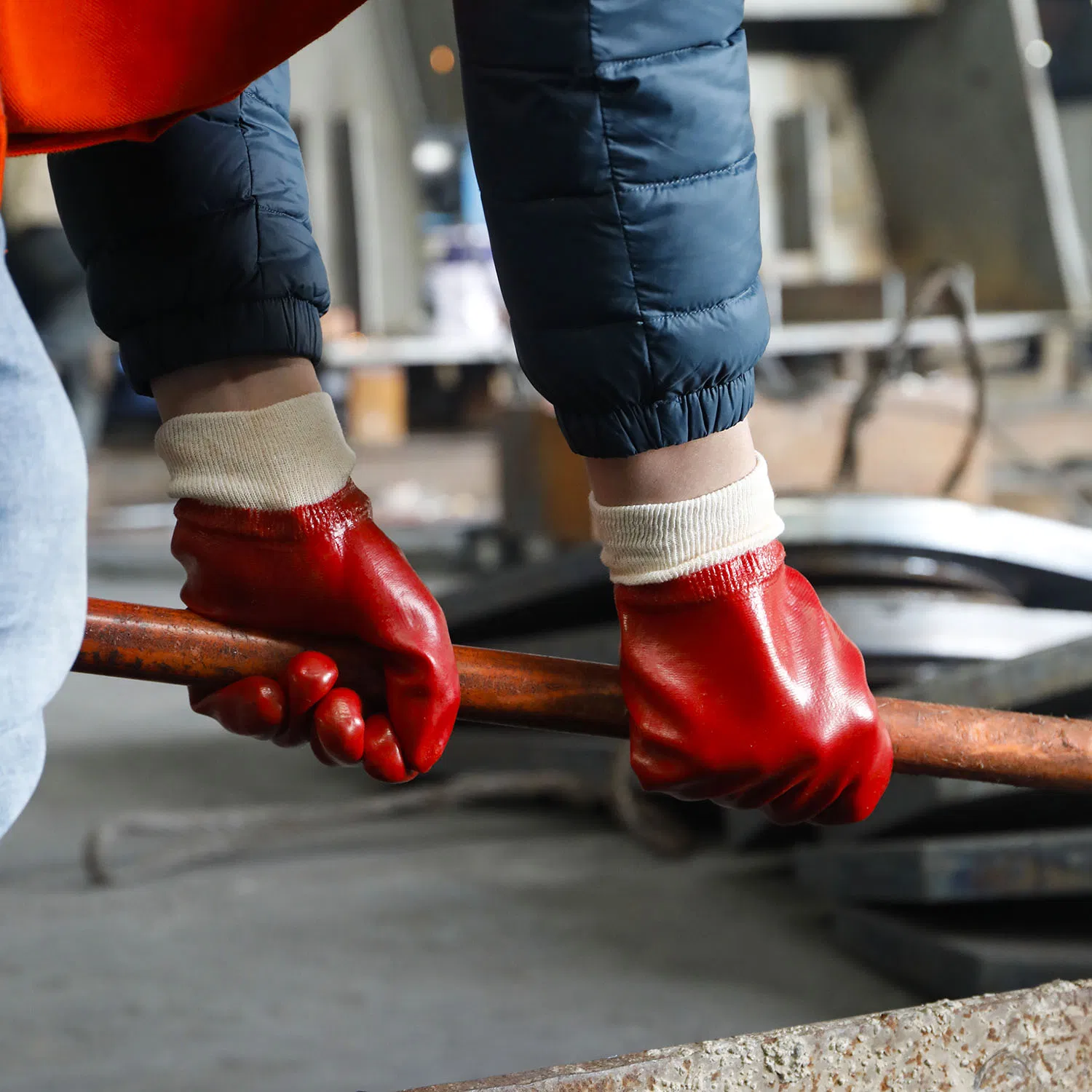
PVC-Handschuhe
PVC-Handschuhe are plastic protective gloves made primarily from polyvinyl chloride resin, combined with plasticizers, stabilizers, and special functional additives.
PVC gloves can effectively resist low-concentration chemicals such as hydrochloric acid, sulfuric acid, potassium hydroxide, and sodium hydroxide, as well as oils and water-based chemicals including animal and vegetable oils, lubricating oil, cleaners, and detergents. However, they are not suitable for prolonged contact with strong organic solvents and aromatic hydrocarbons such as acetone, toluene, and chloroform, as well as certain chlorinated solvents.
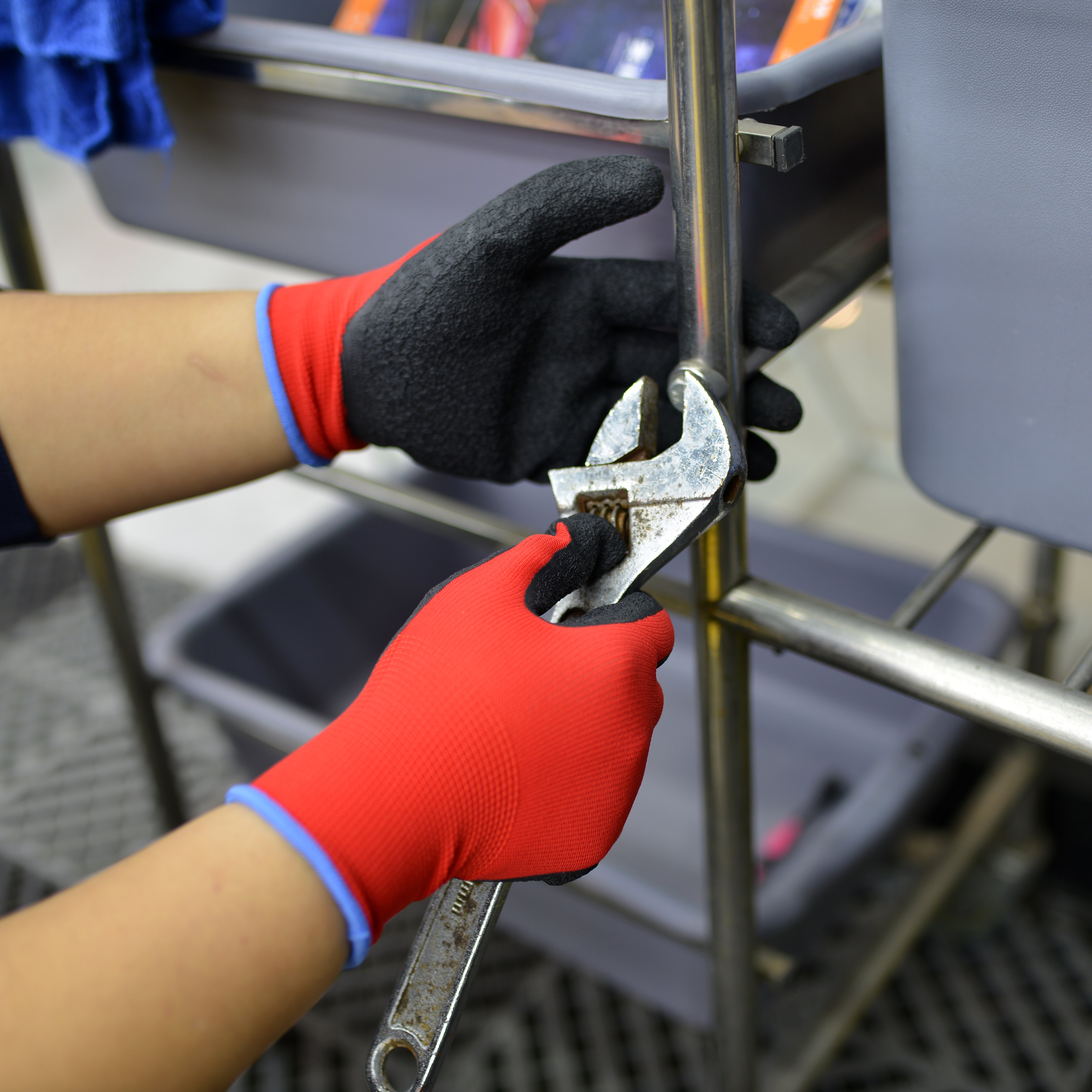
Latexbeschichtete Handschuhe
Latex coated gloves are mainly made by combining a knitted liner with a natural latex coating. The knitted liner not only comes in many varieties, but also serves as the basic structure of the glove, while the latex coating is the core protective material of the outer layer.
Latex coated gloves have certain resistance to low-concentration acids, alkalis, and water-based chemicals such as diluted hydrochloric acid, diluted sulfuric acid, potassium hydroxide, cleaners, and detergents, making them suitable for daily work. However, like latex gloves, they are not recommended for contact with high-strength solvents such as gasoline, diesel, concentrated nitric acid, and acetone in order to ensure hand safety.

Mit Nitril beschichtete Handschuhe
Nitrile coated gloves are also made by combining a knitted liner with nitrile synthetic rubber. The nitrile coating serves as the core protective layer of the outer surface, so their essential structure is similar to latex coated gloves.
Nitrile coated gloves can effectively resist lubricating oil, diesel, gasoline, diluted hydrochloric acid, diluted sulfuric acid, detergents, ethanol, and other low-concentration acids, alkalis, oils, and organic solvents. However, they are not recommended for contact with hazardous chemicals such as acetone, toluene, and strong oxidizing agents in order to ensure hand safety.

Schlussfolgerung
Each type of work glove has different levels of chemical resistance. You need to fully understand their properties before choosing the most suitable work gloves for your needs. This is the first step toward ensuring safe and efficient work. Trust me, making the right choice will never leave you at a disadvantage, and your hands will thank you in the future.
If you are interested in the chemical resistance performance of work gloves or would like to purchase gloves, please Kontaktieren Sie uns as soon as possible. We will provide you with full support and professional service throughout the entire process!
So messen Sie Handschuhgrößen – Quelle: AIBON
Latex-Handschuhe– Quelle: AIBON
Schutzhandschuhe– Quelle: AIBON
Arbeitshandschuhe– Quelle: AIBON
Häufig gestellte Fragen
How long does it take to ship after placing an order for customized work gloves?
When you place a bulk order for customized work gloves, we will require you to provide your delivery address information. This will determine the delivery time of your goods.
Estimated delivery time:
Air express: 10 working days.
Economy air freight: 10 working days.
Railway transport: 2 months.
Sea freight: 4 to 5 weeks.
Please communicate in detail with our customer service representative regarding the specific details of your work glove order.
Kann ich die Produkte zurückgeben, wenn Qualitätsmängel vorliegen?
Sollten Sie Qualitätsmängel feststellen, wenden Sie sich bitte an unseren Kundendienst. Wir werden den Sachverhalt anhand der von Ihnen gemachten Angaben prüfen und eine entsprechende Entscheidung treffen.
Wie lang ist die Lieferzeit für maßgeschneiderte Handschuhbestellungen?
Die Standard-Produktionszeit für Handschuhe beträgt 30–60 Tage. Bei Großaufträgen sind in der Regel 60–90 Tage erforderlich. Wir können Ihnen jedoch Express-Produktionsdienste anbieten, um Ihren Zeitplan einzuhalten. Bitte beachten Sie, dass die oben genannten Zeiträume die Versandzeit nicht beinhalten. Die Produktionszeit beginnt mit der Bestätigung Ihres endgültigen Entwurfs.
Eignet sich das für eine langfristige Zusammenarbeit und den Einkauf großer Mengen?
Ja. Aibon entwickelt für jeden Kunden maßgeschneiderte Lösungen, um eine stabile und langfristige Versorgung mit Schutzhandschuhen zu gewährleisten. Darüber hinaus unterstützen wir jährliche Beschaffungsaufträge und bieten das ganze Jahr über einen zuverlässigen, hochwertigen Service.
Wie lauten die Zahlungsbedingungen und -methoden?
Wir bevorzugen eine Banküberweisung (T/T) auf unser Firmenkonto. Wir akzeptieren außerdem PayPal, T/T-Überweisungen, Akkreditive (L/C), Alibaba, Alipay, WeChat Pay sowie Zahlungen auf private Bankkonten.
 English
 Spanish
 Hindi
 Portuguese
 German
 Russian
 French
 Korean
 Japanese