


In the catering industry and food processing environments where direct contact with food is required, gloves may not be the first thing that comes to mind, yet they are indispensable. They not only protect hands from injury but also serve as a critical safeguard for food safety. Therefore, you should be extremely cautious when selecting suitable kitchen gloves. Next, we will provide a step-by-step detailed analysis of the key points for choosing kitchen gloves.
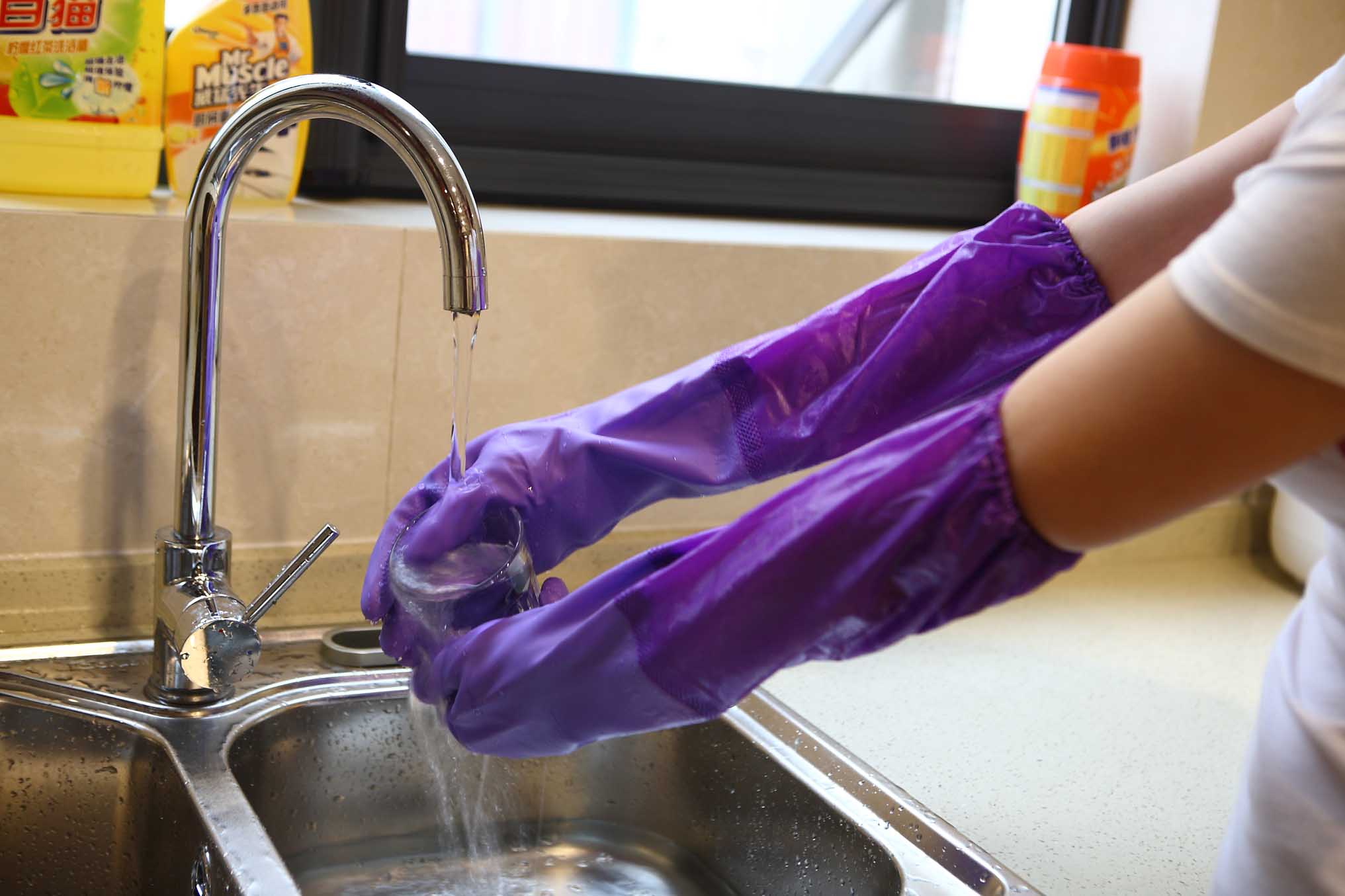
Clarify the Usage Environment
Before selecting kitchen gloves, you must first identify the application scenarios and potential hazards in the environment, and then choose the appropriate gloves based on your needs.
Food Processing Industry
The food processing industry frequently involves contact with grease, blood, cleaning agents, and other contaminants, often accompanied by long working hours and extremely high requirements for food hygiene and safety. Therefore, kitchen gloves must not only have excellent waterproof and oil-resistant properties, but also outstanding tear resistance and anti-fouling performance, thereby effectively improving work efficiency.
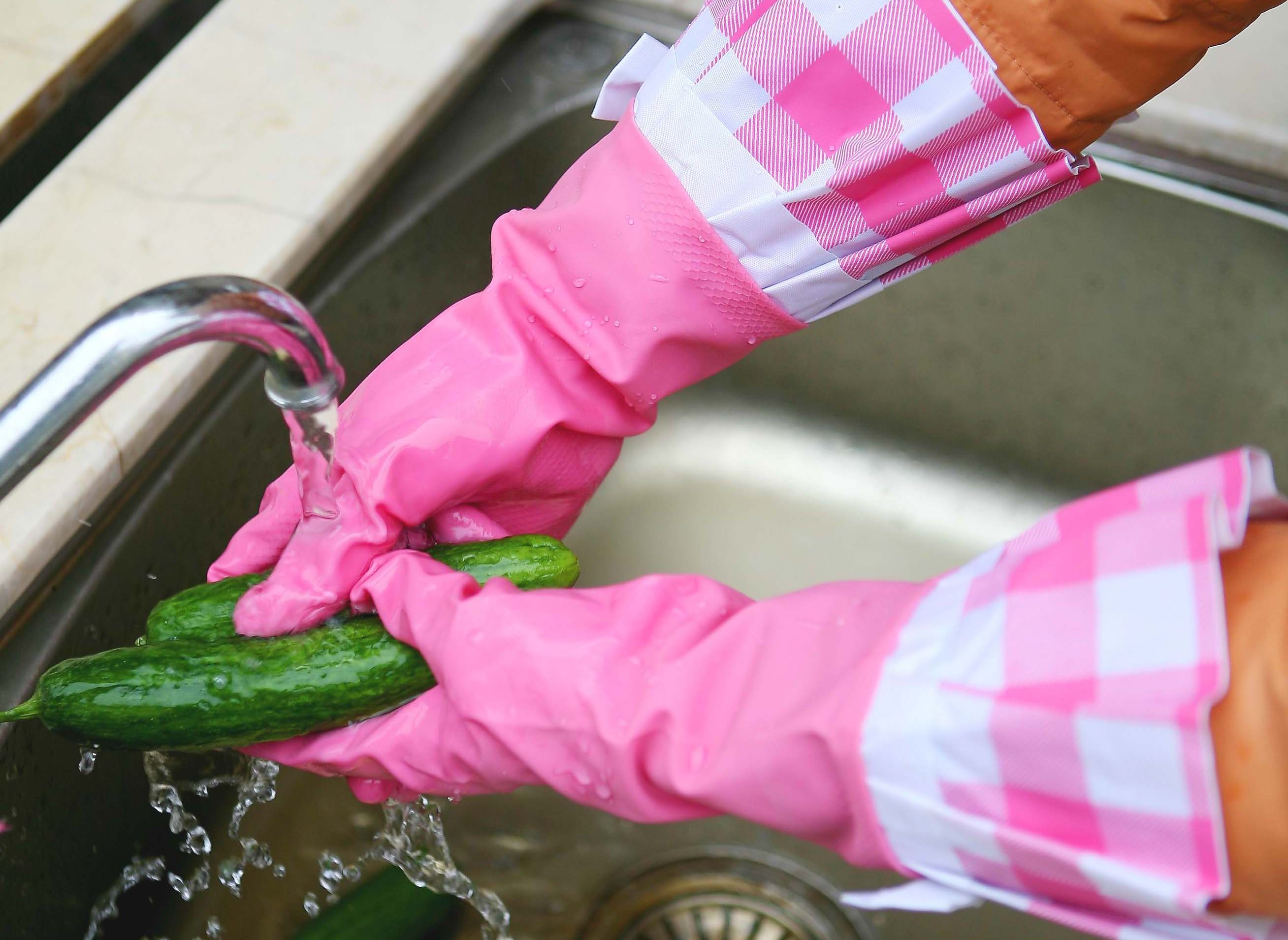
Catering Service Industry
The catering service industry requires a certain level of precision in operations. Therefore, kitchen gloves need to fit closely to the hands, offering excellent flexibility and sensitivity. They should be comfortable and convenient to use, provide a stable grip in wet and greasy environments, and ensure consistent performance under high-pressure working conditions, reducing the risk of accidents.
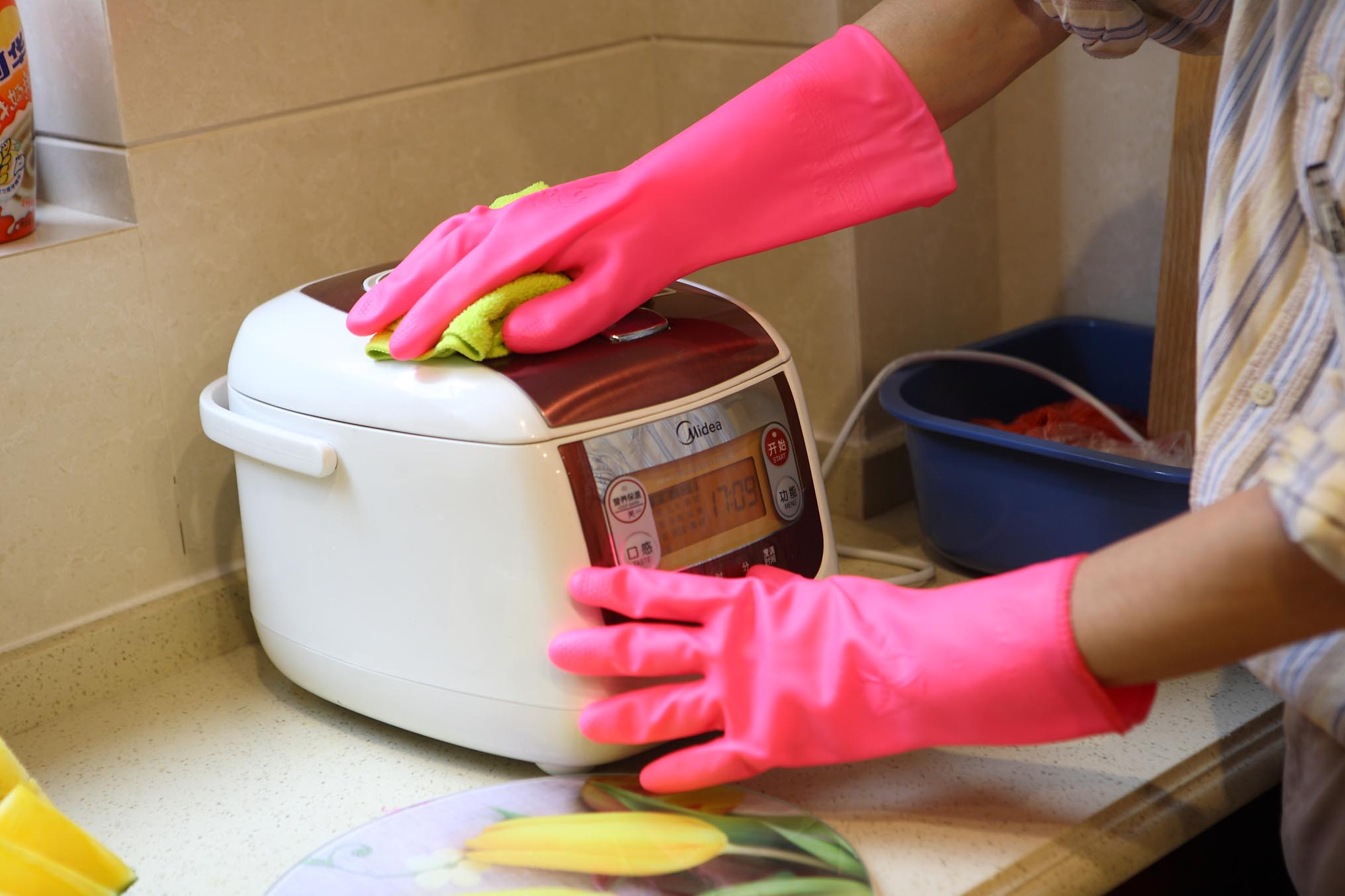
Household Tasks
Household tasks mainly involve dishwashing, grease cleaning, and kitchen surface maintenance. Therefore, the requirements for kitchen gloves are more stringent. They must provide strong anti-slip performance, as well as excellent chemical resistance and durability, ensuring that the gloves do not get damaged easily and provide full hand protection. At the same time, comfort and breathability are also essential for comprehensive protection.
Materials of Kitchen Gloves
Different materials determine different performance characteristics of kitchen gloves, and naturally correspond to different usage scenarios. Therefore, the material is the most critical factor to clarify when selecting kitchen gloves. Below, we introduce several common materials used in kitchen gloves.
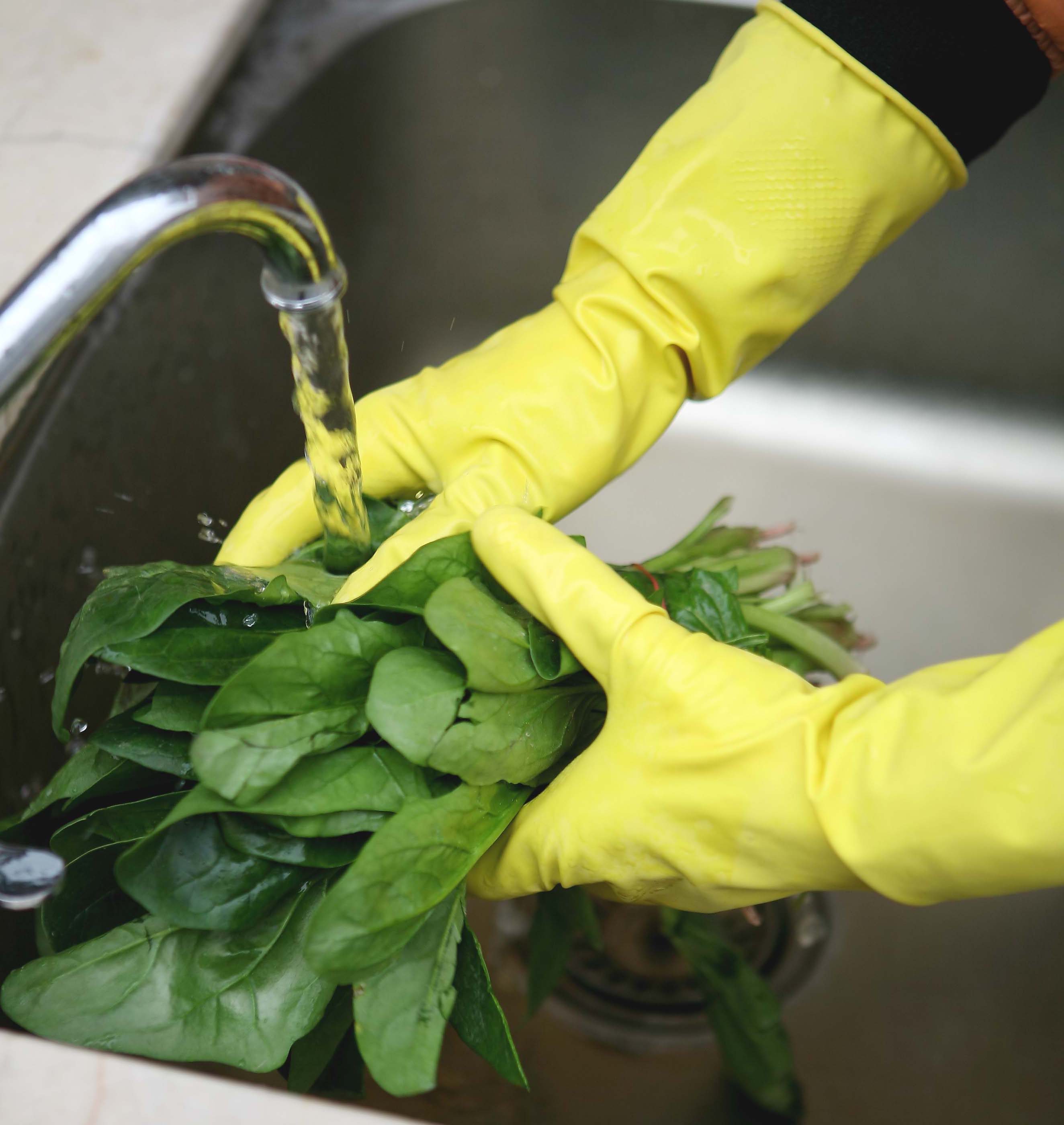
Latex கையுறைகள்
Latex-Handschuhe are made from the sap extracted from Brazilian rubber trees. After filtration and the addition of chemical additives, they undergo a series of processes such as dipping onto glove molds, heating and curing, washing, and rinsing, eventually forming the final product. They are a combination of natural latex and synthetic materials.
Latex gloves fit closely to the hands, offer excellent elasticity, and allow for precise operations. Due to their dense material structure, they can effectively prevent water, grease, cleaning agents, and other contaminants from penetrating the hands, thus protecting them from harm and improving comfort and safety during work.
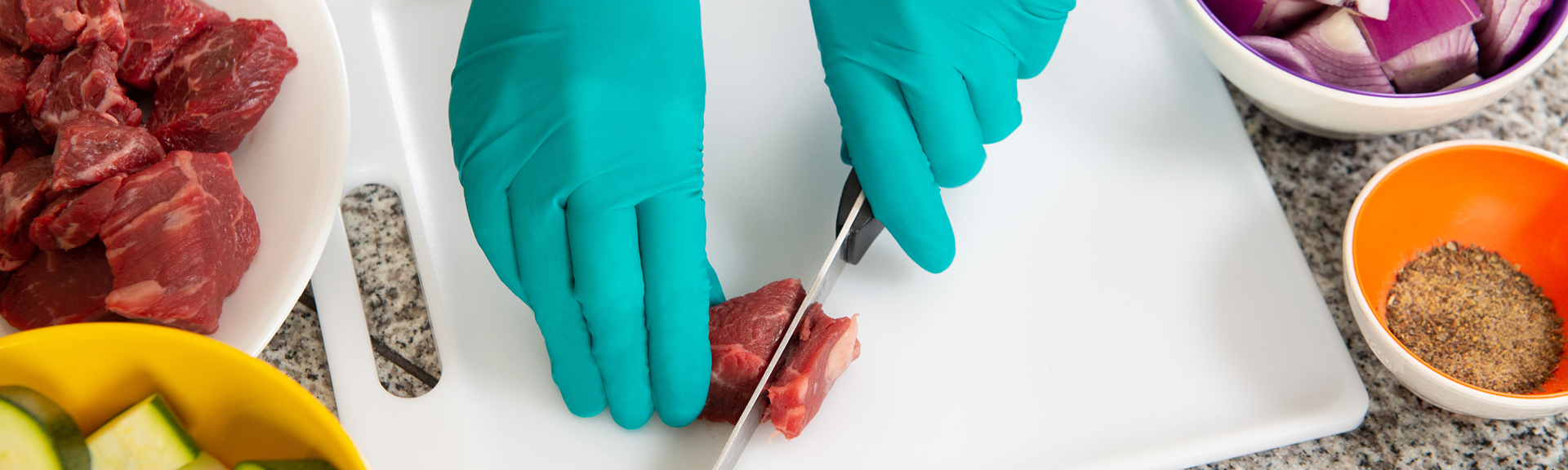
Nitrilhandschuhe
Nitrilhandschuhe are mainly produced by polymerizing acrylonitrile and butadiene into nitrile rubber, followed by the addition of vulcanizing agents, stabilizers, accelerators, and pigments. They are then formed through processes such as hand mold dipping, vulcanization, washing, and drying before being removed from the mold.
Nitrile gloves can resist the erosion of various chemicals such as grease, cleaning agents, and solvents. They offer excellent tear resistance and puncture resistance, making them less prone to damage and providing more reliable protection. Additionally, since they do not contain natural latex, they do not cause latex allergies, which is a significant advantage for individuals sensitive to latex.

Einmalhandschuhe
Einweghandschuhe play a core role in ensuring food hygiene. They help reduce the risk of cross-contamination and prevent the spread of bacteria, grease, and chemical residues between different items, directly addressing food safety concerns at the source.
Disposable gloves are lightweight and comfortable to wear, fit closely to the hands, and provide basic hand protection along with good flexibility. They are convenient for frequent replacement and easy to put on and take off, improving overall kitchen efficiency while reducing skin irritation and ensuring cleaner operations.

Schnittfeste Handschuhe
Schnittfeste Handschuhe are mainly made by weaving high-quality materials such as HPPE, Kevlar, and glass fiber. They can effectively resist injuries caused by knives, cutting tools, and machinery, ensuring hand safety and reducing the risk of accidental injuries.
These gloves offer excellent cut resistance and tear resistance. In addition, they maintain a comfortable feel and strong grip, thereby improving safety when handling complex materials and performing manual operations.
Certifications for Kitchen Gloves
After selecting the appropriate material for your kitchen gloves, you should also confirm that the supplier complies with international food safety standards such as FDA and EU regulations, as well as mechanical protection standards like EN388 and ANSI, to ensure the quality of the gloves.
Schlussfolgerung
In summary, there are various types of kitchen gloves available. The most important selection criteria should be based on your specific needs and usage environment. If you are interested in kitchen gloves or would like to learn more about them, please contact us as soon as possible. Aibon will provide full support and answer all your questions!
So messen Sie Handschuhgrößen – Quelle: AIBON
Latex-Handschuhe– Quelle: AIBON
Schutzhandschuhe– Quelle: AIBON
Arbeitshandschuhe– Quelle: AIBON
Häufig gestellte Fragen
Wie lange beträgt die Lieferzeit für maßgefertigte Handschuhe?
After receiving your order, we aim to complete production within 30 to 45 days. Large-volume orders may require 60 to 90 days. We can arrange flexibly—if you require an expedited order, please discuss the details with our team.Please note: Our production lead time does not include shipping time and starts from the confirmation of your design artwork.
Wie lauten die Zahlungsbedingungen und -methoden?
Gemäß unseren üblichen Zahlungsbedingungen ist eine Anzahlung im Voraus zu leisten, wobei der Restbetrag vor dem Versand zu begleichen ist.
Wir bevorzugen eine Banküberweisung (T/T) auf unser Firmenkonto. Wir akzeptieren außerdem PayPal, T/T-Überweisungen, Akkreditive (L/C), Alibaba, Alipay, WeChat Pay sowie Zahlungen auf private Bankkonten.
Wie hoch ist die Mindestbestellmenge (MOQ) für Schutzhandschuhe?
Bei Standardmodellen haben wir in der Regel Lagerbestände vorrätig. Bei kundenspezifischen Produkten muss die Mindestbestellmenge auf der Grundlage der konkreten Anforderungen noch näher besprochen werden.
Eignet sich das für eine langfristige Zusammenarbeit und den Einkauf großer Mengen?
Ja. Aibon entwickelt für jeden Kunden maßgeschneiderte Lösungen, um eine stabile und langfristige Versorgung mit Schutzhandschuhen zu gewährleisten. Darüber hinaus unterstützen wir jährliche Beschaffungsaufträge und bieten das ganze Jahr über einen zuverlässigen, hochwertigen Service.
Können Sie die Verpackung individuell gestalten?
Ja, auf jeden Fall. Wir können nicht nur exklusive Verpackungen für Sie individuell gestalten, sondern bieten Ihnen auch Anpassungsmöglichkeiten wie Logos auf den Handschuhen, Farben und sogar Etiketten an. Solange Sie einen Wunsch haben, werden wir unser Bestes tun, um diesen zu erfüllen.
 English
 Spanish
 Hindi
 Portuguese
 German
 Russian
 French
 Korean
 Japanese